
Best Odds Guaranteed: The Complete UK Racing Guide
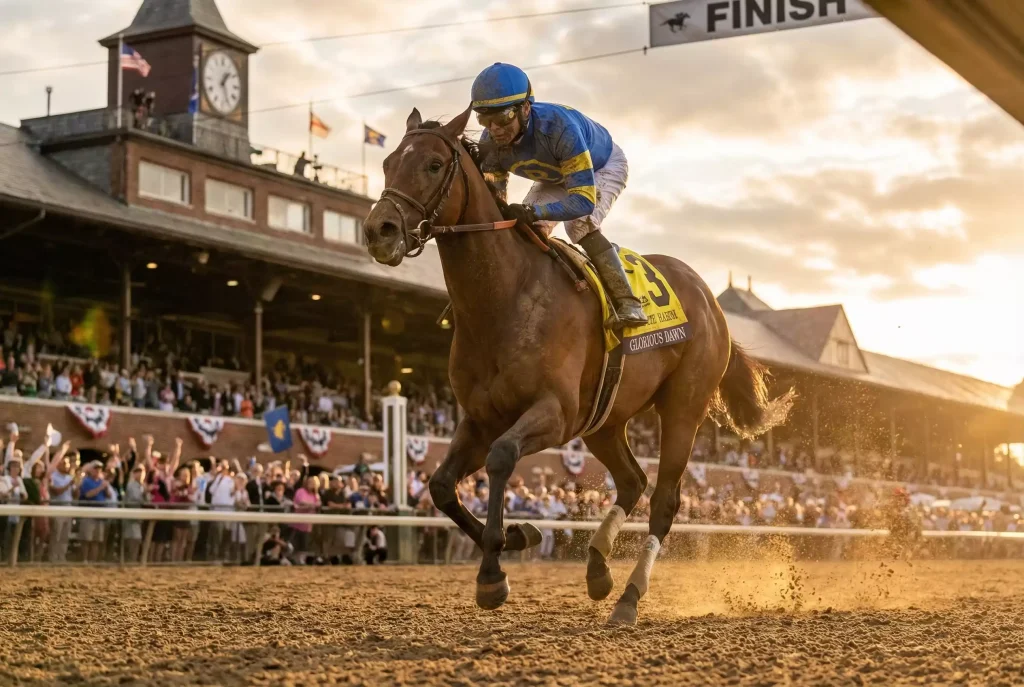
Best Odds Guaranteed is the closest thing to free money in horse racing betting. The concept is disarmingly simple: place your bet at the early price, and if the Starting Price drifts higher, you get paid at the better odds. No catches, no complicated terms. You lock in the best price either way.
This promotion has become so embedded in UK racing culture that many punters take it for granted. That would be a mistake. BOG represents genuine value transfer from bookmaker to bettor, and understanding how to maximise it separates shrewd punters from the rest. In a market where the Gambling Commission reports remote horse racing betting generated £766.7 million in gross gaming yield during the year to March 2026, every edge matters.
The mechanics of BOG vary significantly between bookmakers. Activation times differ by hours. Maximum payouts range from modest to unlimited. Some operators extend BOG to multiple bets; others restrict it to singles. These variations create opportunities for punters who understand the landscape. This guide breaks down everything you need to know about Best Odds Guaranteed: how it works, which bookmakers offer the best terms, and how to build BOG into a coherent betting strategy.
How Best Odds Guaranteed Works
The principle behind BOG is straightforward. You place a bet on a horse at the price available when you click confirm. That price is locked in. When the race starts, the Starting Price is determined by on-course bookmakers based on late betting activity. If the SP turns out higher than the price you took, your bet is settled at the SP instead. If the SP is lower, you keep your original price. You cannot lose.
Consider a practical example. You back a horse at 8/1 early in the morning. Throughout the day, money comes for that horse, pushing the price down. By post time, the SP is 6/1. Your bet is paid at your original 8/1. Now reverse it: you take 8/1, but the horse drifts in the market. The SP ends up at 12/1. With BOG, your winning bet is paid at 12/1 rather than your original 8/1. On a £20 stake, that drift represents an extra £80 in your pocket.
The protection works in one direction only. BOG never reduces your payout; it only enhances it when the SP exceeds your price. This asymmetry is what makes it valuable. In efficient markets, prices drift roughly as often as they shorten. When a price drifts, you benefit. When it shortens, you lose nothing. Over time, this edge compounds.
BOG applies to win bets and the win part of each-way bets. The place portion of an each-way bet is typically settled at your original odds, not an enhanced SP. This detail matters when calculating expected returns on each-way selections at longer prices. Some bookmakers do extend BOG to the place part, but they are exceptions rather than the rule.
Understanding when BOG does not apply is equally important. Most bookmakers exclude ante-post bets, where races are often weeks or months away. They also typically exclude bets placed after a certain time, bets on races not covered by their terms, and prices taken on betting exchanges. Tote bets are never covered by BOG since pool betting operates on different principles entirely.
BOG Activation Times Compared
The time at which BOG activates determines how early you can place a bet and still receive the guarantee. This varies considerably across major UK bookmakers, creating tactical considerations for serious punters.
The earliest activations occur around 8:00 AM on race day. Bookmakers offering this timing include bet365 and Paddy Power for UK races. This early start allows punters to assess overnight market moves, place bets before the morning trading rush, and secure BOG protection from the opening of serious market activity.
A second tier of bookmakers activates BOG around 9:00 to 10:00 AM. William Hill, Coral, and Ladbrokes typically fall into this bracket. The difference might seem marginal, but early morning drifts can be significant. A horse showing 10/1 at 8:00 AM might be 8/1 by 9:30 AM if money arrives from informed sources. Missing that window means missing the best of the early value.
Some operators activate BOG only when they price up each race individually, which can vary from race to race. This approach creates uncertainty. You might place a bet assuming BOG protection only to discover that specific race was not yet covered. Checking terms before betting is essential with these operators.
Irish racing coverage differs from UK racing. Most major bookmakers extend BOG to Irish races, but activation times often differ. A bookmaker offering 8:00 AM activation for UK races might not cover Irish races until 9:30 AM or might exclude them entirely on certain days. Festival meetings like Punchestown, Galway, and Leopardstown typically receive full BOG coverage, but midweek Irish cards may have reduced terms.
Weekend racing often receives earlier BOG activation than midweek fixtures. Saturday cards, particularly at major tracks, tend to be priced earlier with full BOG from morning opening. Tuesday afternoon fixtures at smaller tracks might see later pricing and correspondingly later BOG activation.
The practical consequence of activation timing is significant. A horse that opens at 14/1 at 7:30 AM but shortens to 10/1 by the time BOG activates at 9:00 AM offers no drift protection to the early bettor. With an 8:00 AM activation bookmaker, that same punter would have 14/1 locked in with full BOG coverage. Over a season of racing, these differences accumulate into meaningful value.
Comparing activation times across your preferred bookmakers before major meetings creates a tactical advantage. If Cheltenham starts at 13:30 and you want to bet the opener, knowing which bookmaker provides the earliest BOG activation lets you capture morning value before the market solidifies. This preparation takes minutes but pays dividends across multiple bets.
BOG Conditions and Exclusions
Every bookmaker attaches conditions to their BOG offer. Understanding these terms prevents unpleasant surprises when you expect an enhanced payout and receive your original odds instead.
Maximum payout limits represent the most significant restriction. Some bookmakers cap BOG enhancements at a specific figure, often around £10,000 to £50,000. If your original bet would return £20,000 and the SP would return £35,000, you might only receive the capped amount rather than full SP value. High-stakes punters need to check these limits before placing large bets on potential drifters.
Certain race types fall outside BOG coverage. Virtual racing is universally excluded since there is no genuine Starting Price mechanism. Some bookmakers exclude races from smaller tracks, all-weather fixtures, or races with fewer than a specified number of runners. Amateur and charity races occasionally fall outside terms as well.
Restrictions on enhanced or boosted prices create another layer of complexity. If you take a price boost on a horse, that selection may be excluded from BOG. The logic is straightforward from the bookmaker’s perspective: they have already enhanced the price once and will not do so again. This means accepting a 7/1 boost on a horse showing 6/1 might cost you if the SP drifts to 9/1.
Accounts with restrictions or limits may find BOG withdrawn entirely. Bookmakers identify profitable customers and progressively remove their promotional benefits. Roughly 15% of UK adults bet on horse racing monthly, and bookmakers have sophisticated systems for identifying which customers represent value and which do not. If your account has been limited, BOG terms may no longer apply to your bets even if they appear in general advertising.
Bet type restrictions also apply. Forecast and tricast bets are never covered. Betting without the favourite or other exotic markets fall outside BOG terms. The guarantee applies to standard win and each-way bets on individual horses in fixed-odds markets only.
Geographic restrictions occasionally surface. Some bookmakers limit BOG to customers located in specific countries or exclude customers who access the site through certain jurisdictions. UK-based punters rarely encounter this issue, but it matters for those betting while abroad or using VPN services.
Time of bet placement relative to race start also affects coverage. Bets placed very close to the off, typically within the final few minutes, may be excluded from BOG on grounds that the market has essentially closed. The exact cutoff varies by operator and sometimes by race. This restriction prevents exploitation of last-minute market information that would otherwise guarantee a BOG payout.
BOG on Multiple Bets
Multiple bets introduce compounding effects that make BOG considerably more valuable. When one leg of an accumulator drifts, the entire bet benefits. When multiple legs drift, the impact can be dramatic.
Not all bookmakers extend BOG to multiples. Some limit the guarantee to singles only, viewing the compounding effect on accumulators as too generous. Others offer BOG on all multiple types, recognising that the promotional value attracts customers. The distinction matters enormously for punters who favour Lucky 15 and Lucky 31 bets.
Consider a Lucky 15 covering four horses. Each horse drifting from 8/1 to 10/1 would not simply add a small increment; it would multiply through the doubles, trebles, and four-fold accumulator. The difference between original prices and SPs compounds at each stage. A Lucky 15 with four drifters can return substantially more than expected based on early prices.
Bookmakers that offer BOG on multiples typically include bet365, Paddy Power, and William Hill, though specific terms change periodically. Others restrict BOG to singles or to accumulators with fewer than a certain number of legs. Checking current terms before placing weekend multiples is worthwhile.
Each-way multiples create additional complexity. The win portions of each selection might receive BOG treatment while the place portions do not. Calculating the full impact of drift across a Lucky 15 or Lucky 31 requires understanding exactly which components of the bet benefit from enhanced prices. Some bookmakers clarify this in their terms; others leave punters to discover the answer upon settlement.
Yankee and Super Yankee bets present interesting BOG scenarios. With six doubles, four trebles, and one four-fold across four selections, a single drifter impacts eleven of the fifteen bet lines in a Lucky 15. Two drifters affect the bets even more dramatically. The mathematics of compounding means BOG on multiples can occasionally produce payouts far exceeding what the original prices suggested.
The practical implication is clear. If you regularly bet Lucky 15s or similar multiple wagers on Saturday racing, selecting bookmakers that extend BOG to these bet types adds genuine expected value. The difference might amount to several winning bets over a season.
Maximising BOG Value
Extracting maximum value from BOG requires understanding market dynamics and timing. The guarantee rewards punters who can identify horses likely to drift rather than shorten.
Horses that tend to drift share certain characteristics. Unfashionable trainers with good course form often open at reasonable prices before money arrives. Lightly raced horses with limited public form attract less early attention than horses with prominent recent runs. Races with low liquidity early in the day see wider price movements as money comes later.
Timing your bets to coincide with BOG activation allows you to capture morning prices before professional money moves markets. Prices at 8:00 AM often differ significantly from those at 10:00 AM as tipsters publish selections and morning gamblers place bets. If a horse opens at 12/1 and you expect it to shorten to 10/1 based on typical patterns, taking the early price under BOG protection captures the best of both worlds.
Monitoring overnight betting shows reveals where early money has gone. Significant support overnight typically continues into the morning, suggesting those horses will shorten further. Conversely, horses that have drifted overnight may continue drifting as negative sentiment persists. BOG protects you when you are wrong about direction while rewarding correct drift predictions.
Account distribution across multiple bookmakers extends your BOG coverage. Different operators offer different early prices on the same horse. By maintaining funded accounts with several major bookmakers, you can take the best available morning price from whichever operator stands out on a given selection. This approach also reduces the risk of any single bookmaker restricting your account based on perceived profitability.
Keeping records of BOG payouts quantifies the value over time. Tracking the difference between your original stake price and the SP on winners reveals how much the guarantee has added to your returns. Many punters who keep such records are surprised by the cumulative benefit, particularly on Saturday cards with multiple drifters.
Understanding seasonal patterns helps target BOG opportunities. Winter jumps meetings tend to produce larger price swings than summer flat meetings. Smaller fields mean individual market moves have larger impacts. Festival weeks see enormous trading volumes that create both sharper price efficiency and occasional dramatic drifts when sentiment shifts late.
Combining BOG awareness with form analysis creates a systematic edge. If your handicapping identifies a horse at 12/1 that you believe should be 8/1, you want that horse to attract money and shorten. But if your analysis suggests a horse at 12/1 should be 16/1, you want BOG protection when taking the early price in case the market agrees with your assessment and drifts the horse accordingly.
BOG vs Price Boosts
Price boosts and BOG serve different purposes, and choosing between them requires understanding what each offers. A price boost is a one-time enhancement applied to a specific selection. BOG is an ongoing guarantee that protects against adverse price movements.
Price boosts typically offer larger immediate improvements than average BOG enhancements. A horse at 5/1 might be boosted to 7/1, representing a 40% improvement. The average drift captured by BOG is more modest, perhaps one or two points on most occasions. From this perspective, boosts appear more valuable.
The key difference is optionality. BOG provides protection in both directions: you keep the better price whether it is your original or the SP. A boost locks you into the enhanced price with no further upside. If that boosted horse drifts from 7/1 to 10/1 before the race, you receive 7/1. Without the boost but with BOG, you would receive 10/1.
Bookmakers structure boosts to favour their own book. They boost prices on horses they want to attract money to, typically horses they believe are overbet at current prices or horses that help balance their liabilities. The enhanced price may still represent poor value compared to true probability. BOG, by contrast, operates mechanically based on SP comparison rather than bookmaker selection.
The decision framework is straightforward. If a boosted price exceeds what you believe the SP will be, and exceeds fair value based on your own assessment, take the boost. If you expect the SP to exceed the boosted price, prefer BOG coverage at the standard price. If a selection appears in a boost but you expect it to drift significantly, passing on the boost might be the better play.
Some punters attempt to combine both by taking a boost on one horse and BOG-covered bets on others in the same race. This hedges the directional bet while capturing promotional value. The complexity increases with each added variable, but so does potential edge for those willing to do the analysis.
The Future of BOG
BOG has been a feature of UK racing betting for decades, but its future is not guaranteed. Economic pressures on bookmakers and regulatory changes create uncertainty about how long the promotion will survive in its current form.
The financial context is striking. According to analysis by the Racing Post and Gambling Commission data, turnover on British horse racing fell by 16.3% between 2021 and 2026, from £10 billion to £8.73 billion. Despite this decline, the Horserace Betting Levy Board recorded levy income of £105 million in 2023-24, a record since the 2017 reform. How is this possible?
“The year had begun with bookmakers’ collective forecasts of Levy yield being lower than the £100m in 2022/23. In the event, there was a continuation of the recent years’ trend with turnover falling but being mitigated by an increase in operators’ margin and consequential gross profit.” That explanation from Alan Delmonte, Chief Executive of the HBLB, reveals the dynamic at play. Bookmakers are extracting more profit from less turnover by widening margins.
Wider margins mean BOG becomes relatively more expensive for bookmakers to offer. Each drift payout represents money that would otherwise contribute to gross profit. As pressure on margins increases, the temptation to reduce or eliminate BOG grows stronger.
Regulatory developments add further pressure. Affordability checks and enhanced customer monitoring increase operational costs. These costs must be recovered somewhere, and promotional offerings are an obvious target. Smaller operators have already reduced BOG coverage or introduced lower maximum payout limits.
The counterargument is customer retention. BOG attracts and retains racing-focused customers who might otherwise spread bets across multiple operators or migrate to betting exchanges. In a competitive market, removing a popular promotion risks losing market share to competitors who maintain it. This tension suggests BOG will survive but potentially with more restrictions, lower caps, and narrower coverage than current levels.
For punters, the implication is to maximise BOG value while it remains available. Promotions evolve, terms change, and yesterday’s generous offer becomes tomorrow’s restricted benefit. Building BOG into your current strategy captures value that may not persist indefinitely.
Conclusion
Best Odds Guaranteed transforms the economics of horse racing betting. It provides free optionality: the better of your price or the SP, with no downside. Understanding BOG mechanics, knowing which bookmakers offer the best terms, and timing bets to maximise drift capture separates informed punters from casual participants.
Before placing your next racing bet, check these points. Does this bookmaker offer BOG on this race? What time does BOG activate? Does BOG extend to multiples if you are betting Lucky 15s or accumulators? What is the maximum payout limit? Is this selection excluded due to a price boost or other restriction?
These questions take seconds to answer but preserve value over hundreds of bets. BOG exists because bookmakers accept the cost as worthwhile for customer acquisition and retention. As a punter, accepting anything less than full BOG coverage on eligible bets is leaving value on the table. Make locking in the best price a non-negotiable part of your betting process.