
Winter Racing Betting: All-Weather & National Hunt Guide
 Available in US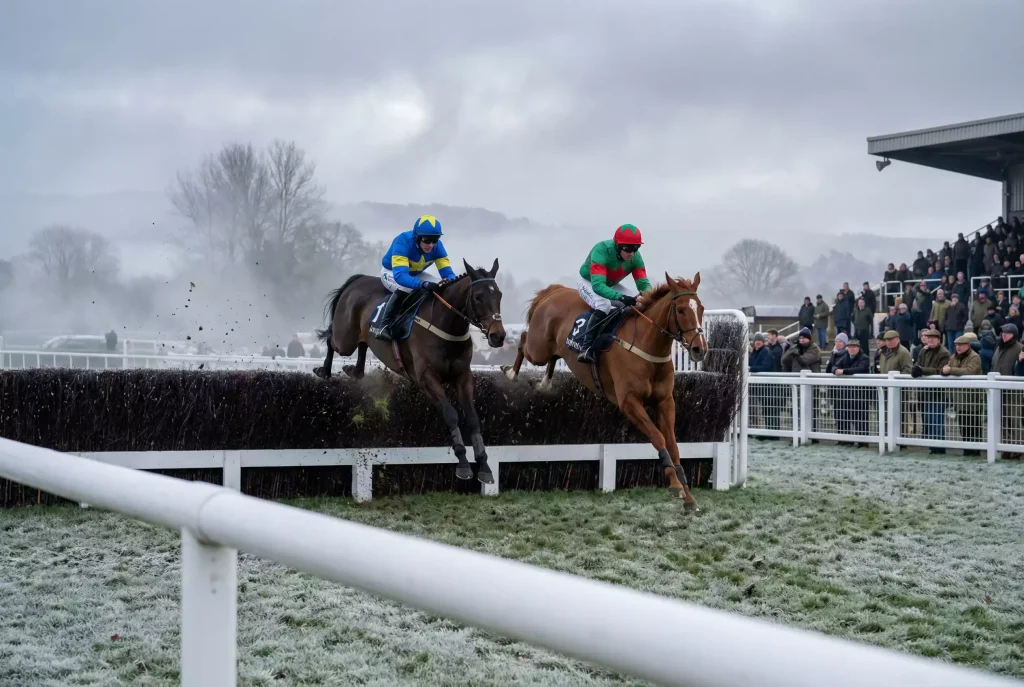
Introduction
Winter provides some of British racing’s finest betting opportunities. National Hunt racing enters its championship phase as the best horses work toward spring festivals. All-weather racing maintains daily action when turf becomes unraceable. Betting through the cold months requires understanding how both codes behave during this distinctive season.
Q4 2026 saw racecourse attendance rise 12.9% year on year according to Racecourse Association data, reflecting strong public appetite for winter racing. The period from November through March concentrates major jumps trials, feature handicaps, and consistent all-weather programmes that reward engaged punters.
This guide covers all-weather surface characteristics, winter jumps season dynamics, form factors specific to cold weather racing, and key meetings that anchor the winter calendar.
The season builds to Cheltenham.
All-Weather Surfaces
British all-weather racing runs on three surface types, each producing different racing characteristics. Understanding which surface a track uses — and how horses perform on it — improves selection accuracy through the winter months.
Polytrack surfaces at Chelmsford, Kempton, Lingfield, and Dundalk provide consistent racing that many horses take to readily. The surface drains well and maintains similar characteristics regardless of weather conditions. Horses who struggle on heavy turf often handle Polytrack effectively.
Tapeta at Newcastle and Wolverhampton produces faster times and seems to favour speed horses over stamina specialists. The surface characteristics differ noticeably from Polytrack, making surface-specific form relevant when horses switch between all-weather tracks.
Southwell’s Fibresand provides the most distinctive all-weather experience. The deeper surface requires different running style and attracts specialists who rarely perform elsewhere. Southwell form often does not transfer to other tracks, but proven course form at Southwell itself carries significant predictive value.
Draw biases exist on all-weather tracks and can be more pronounced than on turf. Studying draw statistics for each track and distance helps identify when post position creates advantage or disadvantage. All-weather specialists often combine surface preference with draw awareness.
The consistency of all-weather racing appeals to systematic bettors. Without going variations, one major variable simplifies form analysis. Results depend on ability and fitness rather than ground preference, making ratings and speed figures more directly applicable.
Winter Jumps Season
The National Hunt season intensifies through winter as quality horses emerge from autumn prep runs and begin targeting spring festivals. Graded races in November through February shape Cheltenham markets, making this period essential for ante-post evaluation and identifying emerging talents.
December features significant trials at Sandown, Kempton, and Leopardstown. The King George VI Chase on Boxing Day represents the season’s championship test, while the Christmas period concentrates betting interest and promotional activity from bookmakers competing for festive stakes. Many casual punters engage exclusively during this period, creating market opportunities.
January provides final opportunities before Cheltenham entries close. Trials at Cheltenham itself — including the Festival Trials Day — give horses their last chance to prove Festival credentials. Form from these meetings directly influences March betting markets. The Dublin Racing Festival in early February provides the final major Irish trial.
Ground conditions become increasingly important through winter. Abandonment risk rises as frost, waterlogging, and snow threaten fixtures. Ante-post bets on specific meetings carry weather risk that day-of-race betting avoids. Monitoring forecasts helps manage this uncertainty, while abandoned meetings can disrupt carefully planned campaigns.
The winter period also reveals which horses are improving and which have reached their ceiling. Novices making rapid progress through handicaps, established stars confirming wellbeing, and disappointments failing to meet expectations — these patterns emerge through winter trials and inform spring betting decisions. Patient observation during winter creates advantages when spring markets mature.
The wider context is set out in our guide to the best horse racing odds.
Form Factors in Winter
Winter form requires attention to factors that matter less during warmer months. Cold weather affects horses differently, and winter racing conditions create specific patterns worth understanding.
Ground conditions swing between extremes. Heavy ground tests stamina and jumping; frozen ground leads to abandonments and sudden rescheduling. Horses with proven soft ground form gain advantage when winter rain produces testing conditions. Those who prefer faster going may struggle or find their races abandoned.
Daylight hours affect training patterns and horse fitness. Trainers work with limited daylight, potentially affecting preparation quality. Horses in consistent work with proven winter form demonstrate they handle the seasonal challenges that others may find difficult.
Fresh horses returning from breaks face uncertainty. Horses who raced through autumn may tire as winter progresses. Those freshened up over Christmas can bounce back with improved performances. Understanding seasonal fitness patterns helps interpret form that might otherwise seem inconsistent.
Newbury attendance rose 48% during a recent meeting compared to prior years, demonstrating that quality winter racing attracts engagement. Punters who focus on winter racing develop advantages over fair-weather bettors who engage only during summer months.
Stable form becomes particularly informative in winter. Some trainers excel at keeping horses healthy and performing through cold weather. Others see results decline as conditions become challenging. Tracking which yards handle winter effectively provides edge in assessing runners from different stables.
Key Winter Meetings
The Betfair Chase at Haydock in late November opens the major chase trials, pitting established stars against each other before the Christmas period. Results here shape King George and Gold Cup markets for the coming months. The race often produces dramatic finishes that clarify the staying chase hierarchy.
Kempton’s King George VI Chase on Boxing Day represents the season’s premier intermediate test. The race attracts the best staying chasers and regularly produces results that reshape Cheltenham Gold Cup betting. The meeting’s timing and quality make it essential viewing, while bookmaker promotions concentrate on this flagship fixture.
Sandown’s Tolworth and Tingle Creek meetings provide hurdle and chase highlights respectively. The Tingle Creek in December tests two-mile chasers before the Queen Mother Champion Chase, while January’s Tolworth offers novice hurdle form for the Supreme and Ballymore. Both meetings attract significant betting interest.
Cheltenham’s Trials Day in late January gives horses their final prep on Festival ground. Runners who win here head to March with proven course form, making trials day crucial for Cheltenham ante-post assessment. The meeting also provides valuable information about how the course is riding before the Festival itself.
Ascot’s Clarence House Chase in January and Betfair Ascot Chase in February provide additional quality opportunities. These Grade 1 races attract top-class fields and often produce results that reshape championship race markets.
All-weather championships at Lingfield and Newcastle provide flat action through the coldest months. The Winter Derby and All-Weather Mile Championships offer competitive racing when turf becomes unraceable, maintaining betting opportunities regardless of weather conditions. These meetings reward punters who develop surface-specific expertise.
Irish winter fixtures at Leopardstown and elsewhere complement British action, providing form that directly impacts Cheltenham markets. The Christmas Festival and Dublin Racing Festival are essential for punters assessing Irish challengers for spring campaigns.
Conclusion
Winter racing rewards punters willing to engage with the season’s specific characteristics. National Hunt championship races build toward spring festivals. All-weather racing provides consistent opportunities when turf becomes unraceable. Understanding surface differences, ground variations, and seasonal form patterns enhances betting through the cold months.
Target the meetings that matter most for your interests. Develop expertise in all-weather surface characteristics if flat racing appeals. Follow jumps trials if Festival betting is your focus. Winter specialisation builds knowledge that casual engagement cannot match, creating advantages that persist across the season.
