
UK Horse Racing Calendar 2026: Key Dates for Bettors
 Available in US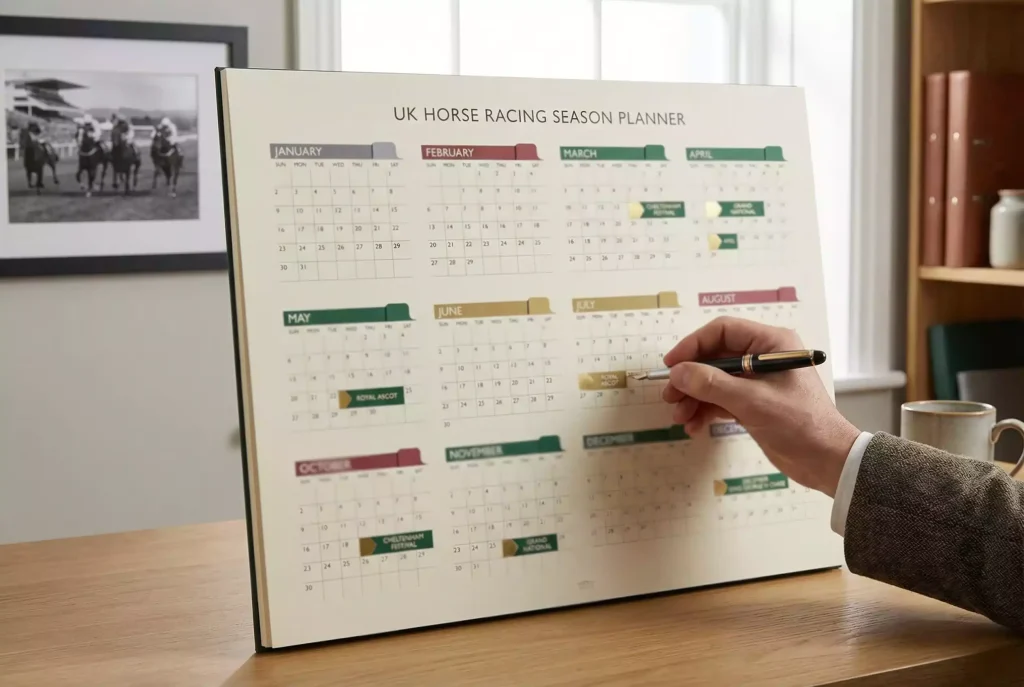
This guide walks through the key fixtures for punters planning their punting year, from the spring festivals through to winter’s testing jumps action. Dates are confirmed where available; some meetings await final scheduling but fall within predictable windows. The emphasis is on betting opportunities rather than social occasions — when the serious action happens and why it matters.
The winter half of it is covered in winter racing.
Spring Highlights
Spring brings National Hunt racing’s grand finale alongside the Flat season’s awakening. March through May offers the most concentrated quality action of the entire year, with festival after festival demanding attention.
The Cheltenham Festival dominates March, running from Tuesday to Friday in mid-month. Four days, 28 races, and approximately £6 million in prize money make this the championship of jump racing. The Champion Hurdle, Champion Chase, Stayers’ Hurdle, and Gold Cup headline proceedings, with supporting races often producing results that shape ante-post markets for years ahead. Betting turnover peaks during Cheltenham; bookmakers and punters both treat this as the main event.
The Grand National Meeting at Aintree follows within weeks, typically during early April. The Grand National itself — forty runners tackling four miles two furlongs over unique fences — remains Britain’s most famous race and one of its biggest betting events. The supporting card includes significant races in their own right: the Aintree Hurdle, Melling Chase, and Sefton Novices’ Hurdle all attract quality fields. Each-way betting finds natural home here, with large fields creating place value that smaller races cannot match.
The Scottish Grand National at Ayr traditionally falls on the Saturday after Aintree, providing a staying handicap chase that some trainers specifically target. The Scottish meeting also features valuable supporting races and draws substantial crowds despite following immediately after Aintree.
Punchestown Festival closes the National Hunt season in late April, offering Irish championship races that frequently feature horses returning from Cheltenham and Aintree campaigns. British punters can access Punchestown markets through UK bookmakers, and the meeting often reveals form lines that influence thinking for the following season.
The Flat turf season properly begins in mid-April at Newmarket’s Craven meeting. The Guineas trials here provide initial form guides for Classic contenders, with ante-post markets adjusting sharply based on performances. By late April, all-weather dominance gives way to turf fixtures daily, and the Flat season builds toward its first major test.
The 2000 Guineas and 1000 Guineas at Newmarket in early May launch Classic season. These mile contests for three-year-olds identify the fastest colts and fillies of the generation, establishing reputations that carry through summer. The Guineas weekend draws enormous betting interest as punters assess which horses might progress to Derby and Oaks glory.
Summer Season
Summer represents the Flat season’s peak, with evening racing supplementing afternoon cards and festival after festival providing premium betting opportunities. The jumps largely pause, returning occasionally for summer jumping cards that attract specialists.
The Derby Festival at Epsom in early June remains the pinnacle of the Classic generation. The Derby itself — one mile four furlongs around Epsom’s unique camber and gradients — tests both speed and stamina while eliminating horses lacking the mentality for Tattenham Corner’s challenges. The Oaks for fillies precedes the Derby by a day. Both races shape stallion values and breeding decisions while providing spectacular betting theatre.
Royal Ascot arrives mid-June, running Tuesday to Saturday with eight races daily. The meeting combines social prestige with genuine racing quality, featuring Group 1 contests throughout the week. The Gold Cup (staying), Prince of Wales’s Stakes (middle-distance), and Ascot Gold Cup headline, while sprints, handicaps, and two-year-old races ensure variety. Royal Ascot betting turnover rivals Cheltenham, making this the Flat calendar’s centerpiece.
The July Festival at Newmarket provides mid-summer quality, with the Falmouth Stakes and July Cup among the features. Newmarket’s summer meeting lacks Royal Ascot’s social profile but offers valuable races and betting opportunities on horses reaching peak summer form.
Glorious Goodwood at the end of July closes the major summer festivals. Five days of quality racing on the Sussex Downs include the Sussex Stakes, Goodwood Cup, and Nassau Stakes alongside competitive handicaps. The undulating track and unique configuration produce results that sometimes confound formbook students.
The Ebor Festival at York in August brings northern racing to championship level. The Ebor Handicap itself — Britain’s most valuable handicap for staying horses on the Flat — attracts huge fields and enormous betting interest. The Juddmonte International and Nunthorpe Stakes provide Group 1 quality alongside the Ebor’s cavalry charge.
Evening racing throughout summer offers consistent opportunities. Fixtures at Kempton, Windsor, Sandown, and numerous provincial tracks run through July and August, providing daily betting action in accessible formats. The informality of summer evenings suits casual engagement while competitive fields ensure genuine betting markets.
The wider context is set out in our guide to the best horse racing odds.
Autumn and Winter
Autumn transitions the calendar from Flat championship racing to the jumps season proper. October through December sees the best staying Flat horses compete while National Hunt returns with graded action building toward spring festivals.
The St Leger at Doncaster in September — the final Classic — tests three-year-old stayers over one mile six furlongs. The Leger meeting has reinvented itself with enhanced prize money and additional features, though the Classic retains primacy. Shortly afterward, the Cambridgeshire and Cesarewitch handicaps at Newmarket’s autumn meetings provide betting carnivals for punters who relish big fields and competitive handicaps.
Champions Day at Ascot in mid-October closes the Flat turf season with Britain’s richest race meeting. The Champion Stakes, Queen Elizabeth II Stakes, Sprint Champion, and Long Distance Cup bring together divisional champions for season-ending showdowns. The all-star fields create betting markets where form has been thoroughly tested against quality opposition.
The jumps season accelerates through November. The Paddy Power Gold Cup at Cheltenham signals serious business resuming, followed by the Betfair Chase at Haydock and Hennessy (now Ladbrokes) Trophy at Newbury. These early-season handicaps identify horses working toward spring targets while producing quality contests in their own right.
The Christmas period concentrates high-quality jump racing into a festive fortnight. The King George VI Chase at Kempton on Boxing Day headlines the winter programme, with Leopardstown’s festival in Ireland providing Irish championship action simultaneously. The Welsh National at Chepstow and multiple other valuable races complete a period when serious punters devote considerable attention daily.
Q4 attendance figures demonstrated racing’s winter appeal, with Q4 2026 showing a 12.9% attendance increase year-on-year according to Racecourse Association data. The jumps crowd remains loyal, and quality fixtures reward that loyalty with competitive racing.
January and February maintain jumping momentum while weather permits. Trials for Cheltenham feature prominently — the Cleeve Hurdle, Cotswold Chase, and similar races position horses for Festival challenges. The Irish winter programme at Leopardstown, Punchestown, and elsewhere provides cross-channel form lines that sharp punters monitor closely.
Ante-Post Windows
Ante-post betting — wagering on races before raceday — offers enhanced odds in exchange for non-runner risk. Understanding when ante-post markets open and optimal timing for engagement helps punters extract maximum value from major fixtures.
Cheltenham ante-post markets open immediately after the previous year’s Festival, with early prices available on the following March’s renewals. Serious ante-post punters begin their Cheltenham engagement during summer, when trials reveal genuine contenders and prices remain generous. By Christmas, Cheltenham markets have firmed considerably on obvious candidates, though value remains available on horses whose campaigns develop unexpectedly well.
Grand National ante-post betting follows similar timelines but with particular attention to handicap marks. Weights are published in February, at which point some horses appear obviously well-handicapped while others look burdened. The period between weights publication and the race offers intense ante-post activity as punters assess which runners genuinely hold entries and which connections are merely speculating.
Classic ante-post betting for the Derby, Oaks, and Guineas peaks during March and April as trials reveal the generation’s best three-year-olds. Two-year-old form from the previous season provides initial guidance, but Classic trials at Newmarket, York, Chester, and Newbury reshape markets dramatically. The 2000 Guineas often sees favourite changes in the fortnight before the race.
Royal Ascot ante-post betting attracts particular interest because the meeting’s breadth creates many opportunities. Handicap ante-post punters study likely entries weeks ahead, assessing which horses might slip through with favourable marks. Group race markets offer cleaner assessments but less dramatic value shifts.
The key principle throughout: ante-post value exists because you accept non-runner risk. If your selection does not run, you typically lose your stake (unless Non-Runner No Bet terms apply). This risk earns the enhanced odds. Punters who engage ante-post successfully combine early identification of likely contenders with realistic assessment of whether entries will mature into runners.
Conclusion
The racing calendar rewards punters who plan ahead. Major festivals concentrate quality and betting interest; ante-post windows create opportunities for those willing to commit early. Understanding the rhythm of the year — spring jumps championships giving way to Flat Classics, summer festivals leading to autumn transitions, winter’s return to National Hunt focus — enables strategic engagement rather than reactive scrambling.
Marking key dates in advance, monitoring ante-post markets from their opening, and budgeting betting activity across seasons all contribute to sustainable punting. The 2026 calendar offers familiar landmarks in familiar sequences. The question is whether you approach them with preparation or simply wait for each one to arrive.
British racing’s vibrancy ensures the calendar remains compelling. Newbury CEO Shaun Hinds highlighted “extraordinary” growth at their Challow Hurdle fixture, with attendance up 48% year-on-year — evidence that punters continue embracing quality winter racing alongside the headline festivals.
