
Tote Betting Guide: Pools, Placepot & Scoop6 Explained
 Available in US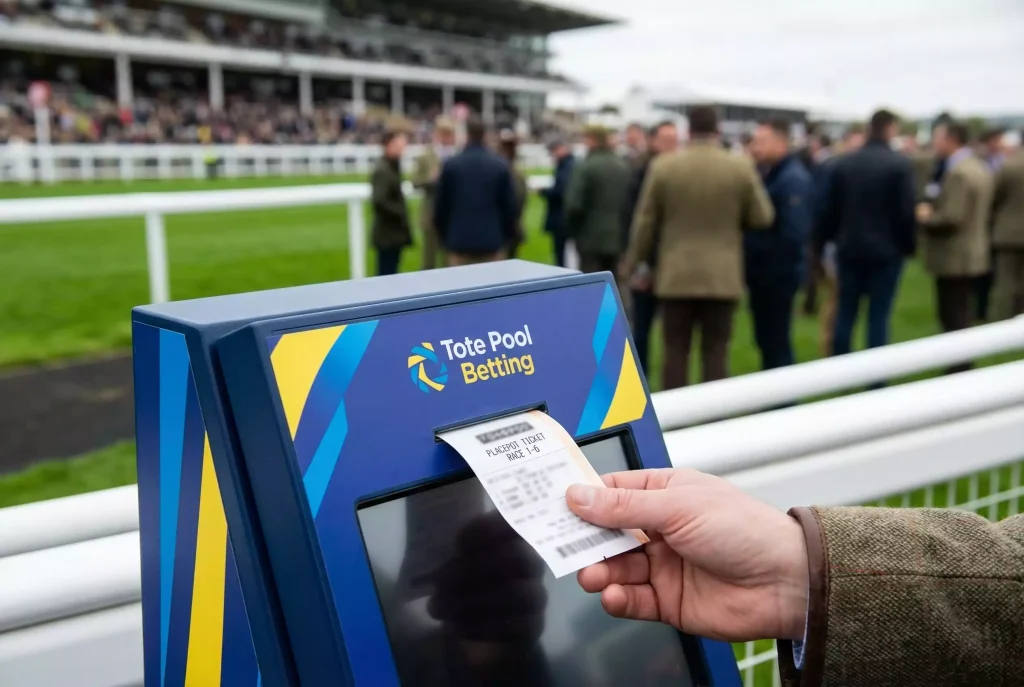
The Horserace Betting Levy Board reported that levy income from betting reached £105 million in 2023-24, a record figure since the 2017 reform. Pool betting contributes to this through the tote’s operations, demonstrating that collective wagering remains a significant part of Britain’s racing economy despite fixed-odds dominance.
The appeal of “pooling for prizes” lies in potential returns that fixed odds cannot match and the communal aspect of shared success. When everyone holding winning Placepot tickets splits the dividend, you are betting with rather than against fellow punters. This guide explains how pool betting works, when it offers genuine value, and strategies for approaching the Tote’s most popular products.
Fixed-odds place bets work differently: place betting.
Pool vs Fixed Odds
Fixed-odds betting locks in your price at the moment of placing. Back a 10/1 winner and you receive 10/1 regardless of what happens to the market afterwards. The bookmaker accepts risk; you know your potential return immediately. Pool betting operates inversely. The odds emerge only after betting closes, determined by how the total stake divides among winning tickets.
The Tote deducts a percentage from the pool to cover operations and contributions to racing before distributing the remainder. This takeout varies by bet type but typically runs between 13% and 27%. For Totewin (backing a horse to finish first), the deduction is around 13.5%. More complex products like the Scoop6 carry higher deductions reflecting their jackpot nature.
Pool dividends frequently differ from fixed-odds Starting Prices. Heavily backed horses sometimes return less through the Tote than SP; lightly backed runners can pay substantially more. This variance creates both opportunity and risk. You might catch a bigger dividend on an unfancied winner or receive disappointing returns on a popular selection that attracted heavy Tote support.
The guaranteed minimum on Totewin and Toteplace — currently paying no worse than SP minus 10% — provides a floor but not a ceiling. This guarantee means pool betting rarely produces catastrophic outcomes compared to fixed odds, though it also limits upside on heavily backed favourites. The Tote essentially offers market-linked returns with variance that sometimes benefits punters.
Exotic pool bets — Exacta, Trifecta, Placepot, Scoop6 — have no fixed-odds equivalent. Traditional bookmakers offer forecast and tricast betting, but these products use computer calculations rather than genuine pool dynamics. The Tote’s versions derive dividends from actual collective wagering, producing returns that reflect genuine market participation rather than mathematical formulas.
Placepot Strategy
The Placepot requires selecting horses to place in each of the first six races at a meeting. All six selections must finish placed for your ticket to win. Minimum stake is £1, with dividends depending on pool size and how many tickets survive each leg. On major racing days, Placepot pools regularly exceed £500,000; even on quieter afternoons, five-figure pools are common.
Approach matters more than luck with Placepots. Backing six favourites rarely produces worthwhile returns because many others do the same, fragmenting the dividend among numerous winning tickets. The skill lies in identifying horses likely to place that others overlook — ideally finding one or two “bankers” while taking calculated risks elsewhere.
Perming increases coverage at increased cost. Rather than selecting one horse per race, you can include multiple selections. Covering two horses in each of six legs requires 64 combinations at £1 each — a £64 total stake. Three horses per race means 729 combinations. Most Placepot players compromise, banking two or three legs on single selections while perming others. A 1×2×1×3×2×2 perm costs £24 and covers realistic scenarios without bankruptcy.
Early races typically determine pool survival more than later ones. If heavy favourites win the first three legs, many tickets remain live and the eventual dividend dilutes. When outsiders place early, the pool thins dramatically and survivors share larger returns. This dynamic encourages slight aggression in early legs — including horses that might place at decent prices while others focus elsewhere.
Banker selections should genuinely merit confidence. Declaring a horse “banker quality” because you like it is self-deception. True bankers have form that suggests placing is near-certain — consistent horses on favoured ground, class droppers facing weaker opposition, or tactical types who rarely run badly. One failed banker eliminates your entire Placepot; treat the designation seriously.
Place terms in Placepots follow standard rules: first three in fields of eight or more runners, first two in 5-7 runner fields, and win only in smaller fields. Races with few runners become dangerous Placepot legs because fewer horses qualify as placed. A four-runner race is essentially a win bet; if your selection finishes second, your Placepot dies.
The wider context is set out in our guide to the best horse racing odds.
Scoop6 Explained
The Scoop6 is pool betting’s lottery equivalent — selecting winners of six nominated races, typically on ITV broadcast days, with the pool carrying forward when nobody succeeds. The potential returns are enormous; rolled-over pools occasionally exceed £1 million. The difficulty matches the reward. Winning the Scoop6 requires genuine skill, considerable luck, and willingness to accept extremely slim odds.
Entry costs £2 per line, with most players purchasing multiple combinations to cover various scenarios. A full perm of three selections per race costs 729 lines at £1,458 total — beyond recreational budgets but common among syndicates chasing big pools. Individual punters typically select carefully rather than perming extensively, accepting that their chances are correspondingly slim.
The Scoop6 divides into Win and Place elements. Successfully picking all six winners claims the Win Fund; if nobody achieves this, the pot rolls over. The Place Fund pays those who find six horses to finish placed, offering consolation for near-misses. When the Win Fund rolls, anticipation builds and pool contributions increase, creating a positive feedback loop that occasionally produces seven-figure prizes.
Winners of the Win Fund then face a Bonus question: correctly predicting a winner from a specified future race to claim an additional jackpot. This secondary challenge keeps winners engaged while generating publicity for the product. The Bonus pool also rolls over when unclaimed, sometimes reaching substantial sums.
Strategy for the Scoop6 resembles Placepot approach at higher intensity. Identifying one or two bankers reduces combinations while maintaining realistic chances. The key insight is that other players tend toward favourites, so including confident outsiders in your lines creates winning scenarios that produce larger shares if successful. Finding six winners is hard enough; finding six winners that others missed pays better.
When Pools Offer Value
Pool betting provides genuine value in specific circumstances that fixed-odds markets cannot replicate. Recognising these situations transforms the Tote from novelty to useful tool.
Lightly backed runners often return better through pools than at SP. When a 20/1 shot wins but attracted minimal Tote support, the dividend frequently exceeds fixed-odds returns because fewer tickets share the pool. Conversely, heavily backed runners return worse through the Tote because the pool concentrates on them. The implication is clear: pool betting suits contrarian selections rather than market leaders.
Large-field handicaps create dividend opportunities. In 20-runner races, pool money spreads across many possible outcomes, and any winner that is not the obvious favourite tends to return well. Big-field handicaps at major festivals often produce Tote dividends substantially exceeding SP when unfancied horses prevail.
Place pools (Toteplace) sometimes offer value on runners whose place odds look tight with fixed-odds bookmakers. If a horse looks almost certain to finish in the frame but bookmakers offer stingy place prices, the Tote might pay better because pool dynamics reward popularity less punitively than fixed-odds mathematics.
Irish and international pools integrated with UK tote operations create arbitrage possibilities for alert punters. Cross-pool dynamics occasionally produce dividends that cannot logically coexist with fixed-odds prices, though exploiting these requires quick reactions and comfortable familiarity with multiple betting platforms.
Remote horse racing betting generated £766.7 million in Gross Gaming Yield for the year ending March 2026, according to Gambling Commission statistics. Pool betting captures a fraction of this figure, but the fraction matters — pools are large enough for dividends to reflect genuine market participation rather than thin liquidity.
Conclusion
Tote betting occupies a distinctive niche within British racing. Pool products offer experiences that fixed odds cannot match — the communal aspect of shared dividends, the potential for variance that rewards contrarian thinking, and signature products like the Placepot and Scoop6 that provide entertainment stretching across entire afternoons.
Approaching pools strategically rather than randomly improves outcomes. Understanding when dividends likely exceed fixed odds, constructing Placepot perms that balance coverage with cost, and accepting the inherent uncertainty of pool dynamics all contribute to sustainable engagement. The Tote works best for punters comfortable with variance who appreciate that the biggest returns come from scenarios others did not anticipate. That uncertainty is precisely the point.
British racing’s continued vitality supports pool betting’s future. Newbury Racecourse CEO Shaun Hinds noted “extraordinary” growth at their Challow Hurdle meeting, with attendance up 48% — the kind of engagement that sustains healthy betting pools.
