
Royal Ascot Betting Guide: Odds, Tips & Value Plays
Introduction
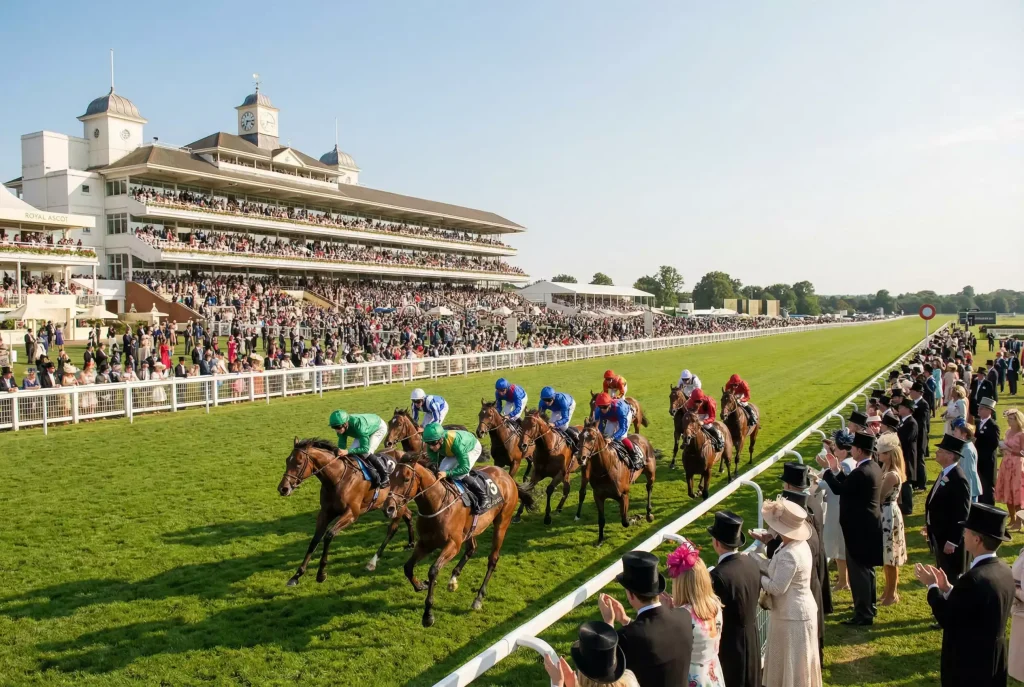
Royal Ascot represents flat racing’s pinnacle, where form meets fashion and championship-calibre horses compete across five extraordinary days. For bettors, the meeting offers both prestige contests at the highest level and massive handicaps where 30 runners jostle for position. Finding Royal Ascot betting odds that represent genuine value requires understanding how this unique meeting differs from ordinary flat racing.
The festival attracted increased attendance in 2026, rising 2.7% compared to the previous year according to Racecourse Association figures. That popularity extends to betting markets, where liquidity reaches levels seen only at Cheltenham among British fixtures. High liquidity means efficient markets — but also creates opportunities for punters who have done their homework before the crowd shapes prices.
This guide covers the meeting’s structure, highlights races with the best betting opportunities, explains where value typically hides, and outlines strategies for the famous cavalry-charge handicaps.
Festival Structure
Royal Ascot runs over five days in June, from Tuesday through Saturday. Each day features seven races mixing Group contests at the highest classification with competitive handicaps. The programme balances sprint racing over five and six furlongs with staying tests up to two and a half miles, accommodating specialists across all distances.
Tuesday opens proceedings with the Queen Anne Stakes over a straight mile, setting the tone for championship-level competition. The day builds toward the Coventry Stakes for juvenile colts — often a pointer to future Classic contenders — before concluding with the Ascot Stakes, a staying handicap over two and a half miles that attracts a full field of marathon specialists.
Wednesday features the Prince of Wales’s Stakes, a ten-furlong Group 1 that regularly brings together the best middle-distance horses in training. The Royal Hunt Cup, a heritage handicap over a straight mile, typically attracts 30 runners and represents one of the meeting’s most competitive betting heats.
Thursday carries unofficial status as Ladies’ Day, though the racing remains paramount. The Gold Cup over two and a half miles crowns the champion stayer, while the Ribblesdale Stakes showcases three-year-old fillies over a mile and a half — potential Oaks heroines making their Festival debuts.
Friday and Saturday complete the programme with further Group races including the Coronation Stakes for three-year-old fillies and the Commonwealth Cup for sprinters. The final day’s Golden Gates Stakes and Wokingham Handicap send the meeting out with competitive sprinting action where big-field chaos creates betting opportunities.
Understanding this structure matters because Group races and handicaps demand different approaches. Group racing rewards backing quality at realistic prices. Handicaps reward finding value among well-matched competitors where small edges compound into profitable positions.
Key Races for Betting
The Royal Hunt Cup divides punters each year. A full field of 30 sprints up Ascot’s straight mile, creating the visual spectacle of a cavalry charge but also producing genuinely competitive outcomes. Backing the winner requires either exceptional luck or identifying an improving horse whose mark fails to reflect current ability. Each-way betting at extended place terms suits this race — four or five places covered at a quarter the odds on selections between 16/1 and 33/1 captures value when several horses finish close together.
The Wokingham Handicap performs a similar function over six furlongs on the final Saturday. A 30-runner sprint, maximum draw bias in play, and high-class handicap performers make this race both chaotic and potentially rewarding. Horses drawn high historically hold advantages when the ground rides fast, creating an additional angle for value seekers.
The Coventry Stakes attracts ante-post interest because winners regularly progress to Classic contention. Backing the winner here at 8/1 or 10/1 can represent value if that horse subsequently trades at 4/1 for a Classic. Watching the race for future reference matters as much as betting it — identifying improvers for subsequent campaigns adds long-term edge.
The Gold Cup rewards specialist stayers whose form over extreme distances sets them apart from middle-distance horses. Market leaders typically represent the best horses in the race, making value harder to find, but upset winners at 10/1 or longer have emerged when established stayers fail to reproduce their best form. The race suits patient punters who wait for clear ante-post value rather than backing near post time.
The Queen Anne Stakes opens the meeting with a Group 1 over a mile, typically attracting a small but high-quality field. Competitive races with six to eight runners offer cleaner betting propositions than 30-runner handicaps, and the market price on the favourite reveals whether casual money has inflated expectations beyond form merit.
Finding Value at Ascot
Irish raiders represent consistent value at Royal Ascot. The cross-channel challenge brings horses who may be underrated by UK-centric markets, and trainers like Aidan O’Brien and Dermot Weld repeatedly claim Group honours with runners insufficiently respected in early betting. Irish form lines can be difficult to assess from British sources alone, creating pricing inefficiencies for those who invest time in studying runners from across the sea.
Three-year-old form evolves rapidly in June. A Classic trial run in April might show a horse finishing behind established rivals, but eight weeks of development can reverse that pecking order. Horses who ran creditably behind strong Classic performers often improve into Festival contenders, especially fillies stepping up from listed company into Group contests. The Coronation Stakes regularly features improving fillies whose form figures undersell their current ability.
Q4 2026 racecourse attendance in Britain rose 12.9% year on year, according to Racecourse Association data, suggesting renewed public appetite for the sport. That renewed interest translates into betting volume, and higher volume typically produces more efficient markets — but also attracts more casual money that can skew prices toward obvious choices. Looking beyond the obvious pays dividends.
Pace analysis matters in Group races with small fields. Knowing which horse leads, which settles off the pace, and how the race is likely to develop helps identify horses whose running style suits probable scenarios. A front-runner in a race lacking pace pressure holds different value than the same horse facing multiple speed rivals.
Trainer patterns reveal themselves across multiple Royal Ascot meetings. Some yards target specific races year after year with similar profiles of runner. Others rarely send horses unless they have a genuine chance. Understanding which trainers take Royal Ascot seriously — and which treat it as an away-day for owners — informs how seriously to take each contender.
Big-Field Handicap Strategy
The Royal Hunt Cup, Wokingham, and other large-field handicaps at Royal Ascot resemble betting puzzles more than form assessments. When 30 competitively handicapped horses contest a sprint, distinguishing the likely winner from a dozen plausible alternatives becomes largely theoretical. The practical approach accepts this uncertainty and structures bets accordingly.
Spread stakes across multiple selections rather than concentrating on a single choice. Four each-way bets at £2.50 each covers more outcomes than a single £10 each-way selection while maintaining the same total outlay. If one of your four finishes second at 25/1, you collect meaningful returns even though your banker disappointed.
Draw bias deserves close study. Ascot’s straight course favours high draws when ground conditions ride fast, but that advantage diminishes or reverses on softer going. Checking historical results under comparable ground conditions identifies whether draw represents a genuine edge or merely a popular narrative that the market has already priced in.
Weight trends indicate assessor confidence. A horse raised several pounds after a close handicap second suggests the handicapper believes better is to come. A horse dropped after disappointing efforts might be underestimated if the run had valid excuses — wrong ground, unsuitable pace, interference — that will not recur.
Trainer-jockey combinations often click at specific tracks. Certain jockeys ride Ascot’s straight course particularly well, and trainers book them specifically for Festival runners. A locally-based jockey with extensive course experience adds genuine value to borderline selections, especially in races where luck in running plays a major role.
Accept that big-field handicaps involve substantial luck. The best selection in the race can suffer a traffic problem and finish sixth while an inferior horse enjoys a clear run and lands the prize. Structuring your betting to survive the variance — multiple selections, each-way coverage, modest stakes — matters more than achieving perfect selection accuracy.
Conclusion
Royal Ascot demands different strategies for different race types. Group contests reward backing quality at fair prices, with Irish raiders and improving three-year-olds offering regular value angles. Big-field handicaps require humility about prediction limits and bet structures that capture place returns alongside win hopes.
The meeting’s prestige attracts casual betting volume that can inflate obvious choices beyond fair value. Looking beyond name recognition, studying draw and pace angles, and understanding trainer patterns separates prepared punters from the crowd. At British racing’s most glamorous fixture, preparation meets opportunity.