
Lucky 15, Lucky 31 & Lucky 63: Multi-Bet Strategies
 Available in US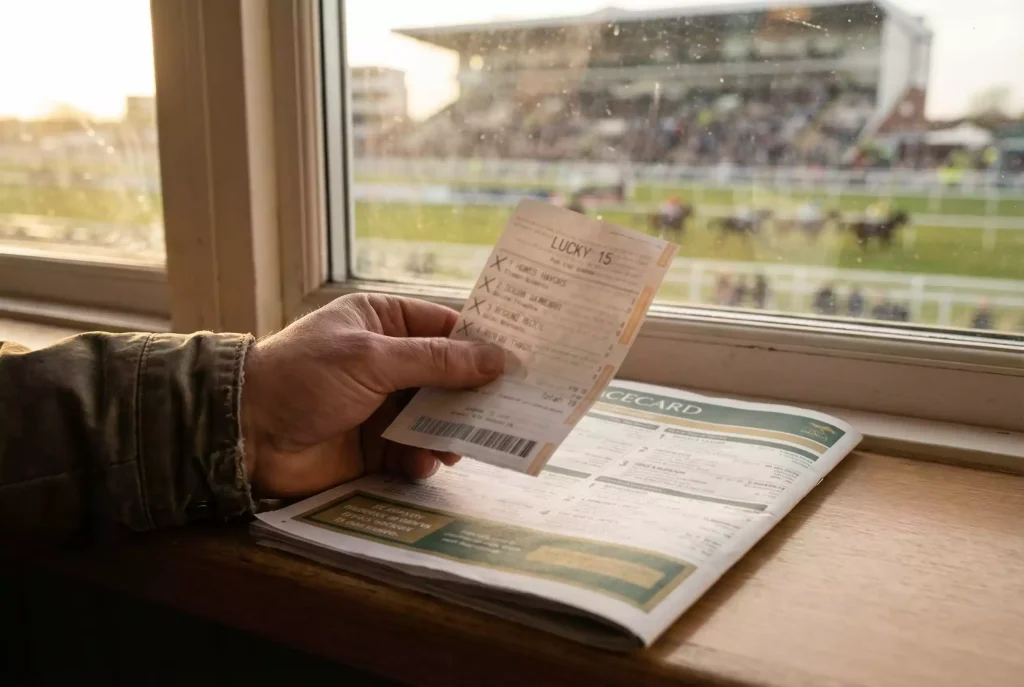
Introduction
Lucky 15, Lucky 31, and Lucky 63 bets let punters combine multiple selections while covering all angles. Unlike straight accumulators that require every selection to win, these full-cover bets include singles, doubles, trebles, and higher combinations — meaning returns arrive even when some selections lose. The approach suits punters who back several fancies across a card without wanting all-or-nothing risk.
The levy collected from bookmakers on British racing reached a record £105 million in 2023-24, according to the Horserace Betting Levy Board annual report. A substantial portion of racing betting involves multiple bet types, with Lucky bets particularly popular on Saturday afternoons when punters combine selections from televised races.
This guide breaks down how each bet type works, explains the consolation bonuses that add value, and identifies when multiples represent smart betting rather than unnecessary complication.
Whether the concession applies is in BOG on accumulators.
Lucky 15 Breakdown
A Lucky 15 requires four selections and comprises fifteen separate bets: four singles, six doubles, four trebles, and one four-fold accumulator. If you place a £1 Lucky 15, your total stake is £15 because each of those fifteen bets costs £1.
The structure means returns accumulate from partial success. With two winners from four selections, you collect on both singles and their double. With three winners, you collect on three singles, three doubles, and a treble. Only when all four selections lose do you receive nothing — any single winner generates some return.
The maths of Lucky 15 returns can surprise first-time users. Four winners at modest prices generates substantial returns because every combination pays. Consider four winners all at 4/1: the four singles return £20 total, the six doubles return £150, the four trebles return £500, and the four-fold returns £625 — a total return of £1,295 from a £15 stake.
Conversely, one winner from four at 4/1 returns just £5 on a £15 stake — a significant loss despite finding a winner. The Lucky 15 structure rewards multiple winners disproportionately because the combination bets require several selections to succeed. This characteristic makes selection quality across all four picks crucial rather than relying on one strong fancy.
Each-way Lucky 15 doubles your stake to £30, covering win and place on all fifteen bets. This version protects against near-misses where selections place without winning, generating returns from the place portions of unsuccessful combination bets. The expanded coverage suits big-field handicaps where place probability exceeds win probability for each selection.
Fifteen percent of UK adults bet on horse racing monthly according to BetVictor data, and Lucky 15 represents one of the most popular bet types among regular punters. The combination of coverage and potential returns appeals to those who want more than singles without the volatility of straight accumulators.
Lucky 31 and Lucky 63 Explained
Lucky 31 extends the concept to five selections across 31 bets: five singles, ten doubles, ten trebles, five four-folds, and one five-fold accumulator. The £1 Lucky 31 costs £31 total, with returns scaling more dramatically than Lucky 15 when multiple selections win.
The additional selection and expanded combinations mean returns from four or five winners reach substantial levels. Five winners at 4/1 each produces total returns exceeding £6,000 from a £31 stake. However, the flip side is more severe — one or two winners from five generates minimal returns relative to stake, making partial success less satisfying than with Lucky 15.
Lucky 63 covers six selections with 63 bets: six singles, fifteen doubles, twenty trebles, fifteen four-folds, six five-folds, and one six-fold. The £63 total stake represents serious commitment, justified only when you have genuine confidence across six selections with the prices to deliver meaningful returns.
The structure of Lucky 63 amplifies both upside and downside. Six winners at 3/1 each returns over £15,000. But the probability of finding six winners diminishes rapidly, and partial success — three or four winners — may struggle to exceed the substantial stake. Lucky 63 suits occasional use when multiple strong fancies align rather than regular Saturday betting.
Stake management becomes increasingly important as bet complexity grows. A £1 Lucky 15 represents reasonable recreational commitment. A £1 Lucky 63 at £63 total stake demands either confidence in all six selections or acceptance that the bet represents a lottery ticket. Treating larger multiple bets as entertainment rather than investment helps maintain perspective on expected outcomes.
Consolation Bonuses
Most bookmakers enhance Lucky bet returns through consolation bonuses that reward specific outcomes. Understanding these bonuses helps identify which bookmakers offer genuine value beyond standard returns.
One winner bonuses typically double the odds on your single winner. If your only winning selection was 5/1, the bookmaker pays 10/1 instead. This consolation transforms a losing Lucky 15 (one winner from four at 5/1 returns £6 on £15 stake) into a break-even or near-break-even outcome. The bonus rewards punters who found a winner despite overall disappointment.
All selections placed bonuses pay consolation when every selection finishes in the places without any winning. This applies to each-way Lucky bets where all four, five, or six selections place without any winning outright. The typical bonus offers 10% or similar uplift on total place returns, adding value to near-miss outcomes.
Some bookmakers offer enhanced terms where a single winner at specific minimum odds triggers larger bonuses. A winner at 10/1 or longer might receive treble odds rather than double. These enhanced consolations reward punters who found value at bigger prices, aligning bookmaker incentives with punter behaviour that seeks outsiders.
Consolation terms vary significantly between operators. Comparing bonus structures before placing Lucky bets identifies where to stake when partial success seems likely. A punter expecting two or three winners from four might prioritise standard returns, while someone taking speculative longer shots might value consolation bonuses more highly.
Reading specific terms matters because exclusions sometimes apply. Enhanced consolations may exclude ante-post bets, specific meetings, or selections below minimum odds. Checking eligibility before placing bets prevents disappointment when assumed bonuses do not materialise.
The wider context is set out in our guide to the best horse racing odds.
When Multiples Add Value
Lucky bets add value in specific circumstances rather than representing universally superior betting strategy. Understanding when the structure enhances returns helps deploy multiples appropriately.
Multiple strong fancies on the same card create natural Lucky bet opportunities. When you genuinely rate four horses across an afternoon’s racing — not forcing selections to fill a Lucky 15 — the combination structure captures upside from correlated success while protecting against individual failures.
Best Odds Guaranteed amplifies Lucky bet value when extended to multiples. Drifting selections improve returns across all combination bets, not just singles. A horse that drifts from 4/1 to 6/1 before winning enhances every double, treble, and higher combination containing that selection. BOG on multiples compounds value across the bet structure.
Longer-priced selections suit Lucky bets because combination returns scale dramatically with price. Four 10/1 winners generate far more than four 2/1 winners relative to stake. If your selections cluster around 6/1 to 12/1, Lucky bets capture the explosive upside potential while singles protect against complete failure.
Shorter-priced favourites typically do not justify Lucky bet structures. The combination returns from four 6/4 winners, while positive, do not compensate for the increased stake compared to placing four singles. Lucky bets work best when you accept higher individual failure probability in exchange for substantial combination returns.
Treating Lucky bets as occasional tools rather than default betting approach maintains discipline. Forcing selections to complete a Lucky 15 dilutes quality, while waiting for genuine opportunities maximises expected returns from the structure.
The racing industry continues showing resilience that supports betting engagement. As David Armstrong, Chief Executive at the Racecourse Association, noted: “2026’s annual attendance figures demonstrate a year of consolidation, which is particularly encouraging considering the sport is in the midst of undertaking significant measures to enhance the product on offer. Given the wider economic difficulties impacting households across the country, and the increased amounts of on-demand domestic entertainment, these figures give us cause for optimism.”
Conclusion
Lucky 15, Lucky 31, and Lucky 63 provide structured approaches to combining multiple selections with coverage across all possible combinations. The formats reward finding several winners while protecting against complete failure through singles and consolation bonuses.
Choose the right bet size for your selections and confidence level. Compare consolation bonuses across bookmakers. Target longer-priced selections where combination returns justify the structure. Used selectively when genuine opportunities align, Lucky bets cover all angles while capturing the upside that makes multi-selection betting worthwhile.
