
Grand National Betting: Best Odds & Each-Way Strategy
 Available in US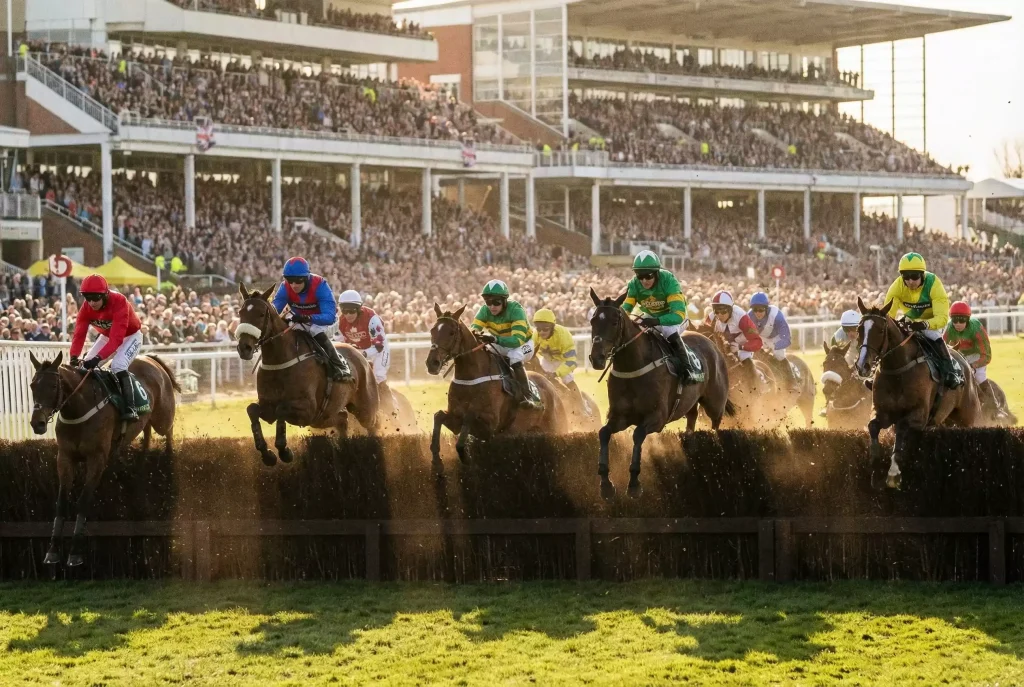
Introduction
The Grand National turns once-a-year punters into racing enthusiasts and transforms seasoned bettors into nervous wrecks. No other race attracts the same volume of casual betting interest, and no other contest offers quite the same blend of chaos, stamina, and improbable narratives. Finding the best odds on this uniquely unpredictable handicap requires understanding what makes it different from every other race on the calendar.
Annual racecourse attendance in Britain exceeded 5 million in 2026 for the first time since before the pandemic, according to Racing Post reporting on Racecourse Association figures. Aintree’s three-day festival, anchored by the National itself, contributes substantially to that figure. The race draws people who never bet on horses at any other time — and it demands a betting approach tailored to its specific conditions.
This guide covers why the National differs from standard racing, how to structure each-way bets for a 40-runner field, where to find genuine value, and which bookmaker promotions deserve your attention.
Place terms decide most of it: each-way betting.
Why the Grand National Is Unique
The Grand National runs over four miles and two furlongs with 30 fences, making it the longest and most demanding race in British jump racing. The field typically includes 40 runners — the maximum permitted — each carrying handicap weights determined by the official assessor. These characteristics create betting dynamics that exist nowhere else in the racing calendar.
Field size alone transforms the mathematics. In a typical handicap hurdle with 12 runners, the market leader might be 5/2 with a realistic chance of winning. In the National, the favourite often goes off at 7/1 or longer because distributing probability across 40 runners compresses prices across the board. This compression creates unusual place value, which we will explore in the each-way section.
Stamina matters more than speed. The race rewards horses who can jump safely for over nine minutes while carrying weight over testing terrain. Brilliant milers mean nothing here. The qualities that predict National success — jumping soundness, staying power, course experience, optimal ground conditions — differ from those that determine most race outcomes. Standard form analysis requires modification.
Attrition shapes results. Only around half the field typically complete the course, with fallers, unseated riders, and pulled-up horses common throughout. This attrition benefits each-way bettors because places become available through elimination as well as merit. A horse that jumps cleanly and stays on can finish in the first four simply by surviving while others do not.
Randomness exceeds normal racing levels. Loose horses cause interference. Tired horses make jumping errors they would never make fresh. The extreme distance amplifies small disadvantages and allows position changes that would be impossible over shorter trips. Accepting this unpredictability is essential for betting with appropriate humility about what form analysis can actually predict.
Each-Way Strategy for a 40-Runner Field
Standard each-way place terms pay on the first four home at one-quarter the odds for races with 16 or more runners. But the Grand National frequently sees bookmakers extend place terms to five, six, or even seven places as a promotional offer. This extension fundamentally changes the value equation for each-way betting.
At standard terms, backing an 40/1 shot each-way means your place portion pays 10/1 if the horse finishes in the first four. With a £5 each-way bet costing £10 total, a place-only result returns £55 plus your £5 place stake — £60 back from a £10 outlay. At six places, you have six chances to land that place payout instead of four. The additional coverage justifies the each-way premium.
Extra places shift optimal selection strategy. At standard terms, you want horses capable of winning because place-only returns are modest. At extended terms paying six or seven places, targeting horses with strong finish potential regardless of winning chances becomes viable. A horse that consistently finishes midfield in staying handicaps might never win the National but has a reasonable shot at finishing fifth or sixth in an attritional race.
Price matters more than usual. The place portion of an each-way bet at 66/1 pays 16.5/1 at quarter odds. At 25/1, the same place pays 6.25/1. This 10-point difference in place returns rewards selecting outsiders with genuine credentials over more obvious choices at shorter prices. The each-way strategy for the National should favour longer-priced horses with demonstrated stamina and sound jumping rather than fancied runners whose prices already reflect market confidence.
Consider splitting stakes across multiple each-way selections rather than concentrating on a single choice. Three £3.33 each-way bets covering different profiles — an exposed stayer, a lightly-raced improver, and a course specialist — cost the same £20 as two £5 each-way bets but provide more coverage in a race where unpredictability dominates.
Finding Odds Value
Value in the Grand National comes from identifying horses whose odds overstate the difficulty of their task. The casual betting influx around the race creates market inefficiencies that sharper punters can exploit by acting earlier or looking beyond name recognition.
Trainers with National expertise warrant attention. Certain yards repeatedly produce fit, well-prepared stayers for the race, and their runners often represent better value than horses from handlers unfamiliar with the challenge. Gordon Elliott and Lucinda Russell have both produced National winners, and horses from established National trainers deserve respect regardless of their general profile.
Course form matters substantially. Aintree’s fences differ from standard National Hunt obstacles, and the Grand National course differs even from Aintree’s Mildmay track used for other festival races. Horses who have completed the course before — even if finishing mid-field — have demonstrated they can handle the unique demands. First-time Grand National runners carry unknown risks that course veterans have already addressed.
Weight trends indicate assessor confidence. The handicapper assigns weights based on perceived ability, but weights can also reflect improvement or decline not yet visible in results. A horse whose weight has risen steadily suggests the assessor sees quality beyond current form. A horse dropping sharply in the weights might indicate problems the market has not fully priced.
British racing contributes £4.1 billion annually to the UK economy according to evidence the British Horseracing Authority submitted to Parliament, and the Grand National represents the sport’s biggest single betting event. That attention creates both opportunity and noise — separating genuine value insights from wishful thinking requires discipline and specific race knowledge.
Bookmaker Offers Compared
Major bookmakers compete fiercely for Grand National business, making the period around the race one of the best times to secure enhanced terms and promotional value. Understanding what different operators offer helps maximise returns regardless of which horses you back.
Extra places dominate National promotions. Most major firms extend place terms beyond the standard four, typically to six or seven places. Compare not just the number of places but the fraction paid — most offer quarter odds, but occasional promotions pay a third. Six places at a third of the odds returns significantly more than six places at a quarter.
Best Odds Guaranteed applies to the National at most major bookmakers, meaning you can take early prices with SP protection. This matters because National ante-post markets are active for months, and prices shift substantially as the race approaches. BOG lets you back a horse in February at 40/1 and receive 66/1 if it drifts to that SP, or keep your 40/1 if it shortens.
Refund offers appear frequently. Losing bet refunds if your horse falls, refuses, or unsats its rider reward punters who suffer cruel luck rather than poor selection. Finishing position refunds — your stake back if your selection finishes second — similarly reduce downside on near-misses.
Enhanced odds for new customers reach their peak around the Grand National. Offers like “66/1 on any horse to win” with low maximum stakes attract first-time punters, but these deals typically pay in free bets rather than cash and carry wagering requirements that reduce real value. Calculate actual expected returns rather than headline numbers.
Opening multiple accounts before the race accesses more promotional variety. Each bookmaker offers different combinations of extra places, refunds, and enhancements, so spreading your National bets across several operators captures more value than concentrating everything with a single firm.
Conclusion
The Grand National rewards punters who embrace its unique characteristics rather than fighting them. The extreme field size, attrition rate, and stamina demands create a betting puzzle unlike anything else in racing. Each-way betting at extended place terms offers mathematically sound value, especially on longer-priced horses with proven jumping ability and staying credentials.
Shop across bookmakers for the best combination of place terms, BOG protection, and promotional offers. Accept that the race contains irreducible randomness, spread your stakes across multiple selections, and enjoy the spectacle — the people’s race delivers drama whether or not your horses come home.
The wider context is set out in our guide to the best horse racing odds.
