
Best Horse Racing Odds UK: Your Complete Guide to Finding Value
Compare. Calculate. Capture value.
Best Horse Racing Odds UK: Your Complete Guide to Finding Value
Finding the best horse racing odds in the UK is not a matter of luck. It is a skill that separates profitable punters from those who slowly bleed their bankrolls to bookmaker margins. The difference between taking 5/1 at one bookmaker and 11/2 at another might look trivial on paper. Over a season of betting, that difference compounds into hundreds or thousands of pounds left on the table—or captured, depending on your approach.
The UK racing market remains one of the largest betting ecosystems in Europe. According to the Gambling Commission's Industry Statistics for 2024-25, gross gambling yield from remote horse racing betting reached £766.7 million in the twelve months to March 2025. That figure sits within a broader gambling industry generating £16.8 billion in total GGY—a 7.3% increase year-on-year. Horse racing punters, in other words, are moving serious money through these markets, and the opportunities for finding value in UK racing have never been more varied.
The industry itself has weathered turbulence. Betting turnover on British racing fell 16.3% between 2021 and 2024, dropping from £10 billion to £8.73 billion according to Gambling Commission data analysed by Racing Post. Yet the live attendance tells a different story. In 2025, racecourse attendance across Britain topped five million for the first time since 2019, reaching 5,031,640 visitors—a 4.8% increase from the previous year. As Kevin Walsh, Racing Director of the Racecourse Association, noted: "I'm pleased to see the 2025 annual attendance figures confirm what anecdotal and visual evidence suggested across the year; racecourse attendance has been growing. Racecourses deserve a lot of credit for understanding consumer drivers and implementing attractive, effective marketing campaigns to communicate the excellent value on offer for a day at the races."
What does this mean for punters seeking value? It means the market is active, liquid, and competitive. Bookmakers are fighting for your custom with promotions like Best Odds Guaranteed, enhanced place terms, and competitive pricing. The tools for comparing odds across multiple bookmakers have never been more accessible. But the punter who simply opens an account with one bookmaker and accepts whatever price they see is leaving money on the table.
This guide takes you through the methodology of finding value in UK racing. We will examine how odds work across different formats, why Best Odds Guaranteed should be non-negotiable for any serious punter, and how to use comparison tools effectively. We will explore each-way betting strategies, identify which bookmakers offer genuine advantages for racing specialists, and look at the major festivals where odds movements create the biggest opportunities. The goal is practical: by the end, you will have a systematic approach to betting on UK horse racing that maximises your returns over time.
What Every UK Racing Punter Needs to Know
- Best Odds Guaranteed is non-negotiable—it converts any price drift into profit while protecting your original stake if the market shortens. Every qualifying UK and Irish race deserves BOG protection.
- Comparing odds across three or more bookmakers before each bet captures 10%+ price disparities that accumulate into hundreds of pounds over a betting year. Convenience costs money.
- Each-way betting offers mathematical edge in large-field handicaps (16+ runners with four places) and on outsiders at 8/1 or longer. It destroys value on short-priced horses and small fields.
- The UK remote horse racing market generates £766.7 million in gross gambling yield annually. Bookmakers protect margins—your defence is systematic comparison and value-based selection.
- Use odds comparison tools before every bet, verify BOG applies, and track your results against closing prices to measure whether your selections are adding value over time.
Understanding Horse Racing Odds
Odds represent two things simultaneously: a bookmaker's assessment of probability and a commercial product designed to generate profit. Understanding this duality is essential for anyone serious about finding value in UK racing. The price you see on a horse is not a neutral statement of its chances—it is a blend of market forces, liability management, and margin.
When a bookmaker prices a race, they calculate implied probabilities for each runner, then add their margin—typically between 5% and 20% depending on the race type and competitive pressure. A perfectly efficient market would have all implied probabilities sum to 100%. In reality, they sum to 105%, 110%, or higher, with the excess representing the bookmaker's theoretical edge. This is the overround, and it is the first hurdle any punter must clear to profit long-term.
The UK market carries a distinctive character shaped by centuries of betting tradition. Fractional odds remain the dominant format at British racecourses and in much of the domestic betting media, though decimal odds have gained ground through online platforms. The tradition of Best Odds Guaranteed—where bookmakers pay the higher of your stake price or the Starting Price if it drifts upward—is largely a British and Irish phenomenon. You will not find it as standard in continental European or American markets.
Participation in UK racing betting runs broader than many assume. According to Gambling Commission data from Wave 2 2025, 7% of British adults had placed a bet on horse racing in the preceding four weeks. When measured over a monthly horizon, BetVictor's 2025 survey data puts the figure at 15% of UK adults betting on racing. The demographic skews younger than stereotypes suggest: 32% of adults aged 25-34 report betting on horse racing, making this cohort the most active age group in the sport.
These punters are competing in a market that rewards attention to detail. A horse drifting from 5/1 to 7/1 represents an opportunity for those who took the early price under Best Odds Guaranteed. A bookmaker offering 1/4 place terms on an eight-runner field when rivals offer 1/5 is handing you genuine edge. The punter who understands odds mechanics and monitors these differences consistently captures value; the one who does not subsidises bookmaker profits.
Before diving into specific strategies, we need to establish fluency with the formats you will encounter. The next section breaks down fractional, decimal, and implied probability calculations—the essential toolkit for comparing odds across bookmakers and identifying when a price represents genuine value.
How Odds Work: Formats and Conversion
British racing uses three main odds formats, and fluency with all three is essential for comparing prices effectively. Bookmakers may display odds in fractional or decimal depending on their default settings; odds comparison tools often show both; and understanding implied probability is necessary for any serious value assessment. Converting between formats is straightforward once you know the formulae.

Fractional Odds
Fractional odds—5/1, 7/2, 11/4—remain the traditional format at British racecourses and in print media. The format expresses potential profit relative to stake: at 5/1, a £1 stake returns £5 profit plus your £1 stake back, for a total return of £6. At 7/2, the same £1 stake returns £3.50 profit plus stake, totalling £4.50.
Reading fractional odds quickly becomes second nature. The first number represents potential profit; the second represents the stake required to generate that profit. Odds-on prices—where the horse is considered more likely to win than lose—reverse this relationship. At 4/6 (sometimes written 4-6), you need to stake £6 to win £4 profit, returning £10 total from a £6 stake.
Common fractional odds and their quick-reference values:
| Fractional | Decimal | Implied Probability |
|---|---|---|
| 1/5 | 1.20 | 83.3% |
| 1/2 | 1.50 | 66.7% |
| Evens (1/1) | 2.00 | 50.0% |
| 2/1 | 3.00 | 33.3% |
| 5/1 | 6.00 | 16.7% |
| 10/1 | 11.00 | 9.1% |
| 20/1 | 21.00 | 4.8% |
| 33/1 | 34.00 | 2.9% |
Decimal Odds
Decimal odds express total return per unit staked, including your original stake. At decimal odds of 6.00, a £10 bet returns £60 total—your £10 stake plus £50 profit. This format dominates betting exchanges and has become standard on many online platforms, particularly for European customers.
Converting fractional to decimal is simple: divide the first number by the second and add 1. So 5/1 becomes (5÷1)+1 = 6.00. And 7/2 becomes (7÷2)+1 = 4.50. Working backwards, subtract 1 from the decimal odds, then express as a fraction: 4.50 becomes 3.50/1, simplified to 7/2.
The advantage of decimal odds is mathematical clarity. Comparing 2.25 to 2.30 is immediately obvious; comparing 5/4 to 13/10 requires mental conversion. For odds comparison across multiple bookmakers, decimal format saves time and reduces errors.
Implied Probability
Implied probability converts odds into percentage terms, revealing what chance the bookmaker's price assigns to a horse winning. This is the format most useful for value assessment: if you believe a horse has a 25% chance of winning but the bookmaker's price implies only 20%, you have found potential value.
The formula for decimal odds: Implied Probability = 1 ÷ Decimal Odds. At decimal 4.00, implied probability = 1 ÷ 4.00 = 0.25 = 25%. For fractional odds, the formula is: Implied Probability = Denominator ÷ (Numerator + Denominator). At 3/1, implied probability = 1 ÷ (3+1) = 1 ÷ 4 = 25%.
Converting Odds to Find Value
A horse is priced at 7/2 (decimal 4.50). Implied probability = 1 ÷ 4.50 = 22.2%.
Your form analysis suggests the horse has a 28% chance of winning based on recent performances, trainer statistics, and going preferences.
The difference (28% vs 22.2%) represents potential value—the bookmaker is underestimating this horse's chances according to your analysis.
Whether you bet depends on the size of this edge relative to your confidence in your assessment. But without calculating implied probability, you cannot begin to answer that question systematically.
The sum of implied probabilities across all runners in a race reveals the bookmaker's overround. A six-runner race where implied probabilities sum to 112% has a 12% overround—meaning the bookmaker's theoretical margin is 12% before any punter places a bet. Lower overrounds indicate more competitive pricing; higher overrounds mean you need more accurate selections to overcome the margin.
Best Odds Guaranteed Explained
Best Odds Guaranteed—known universally as BOG—is the single most valuable promotion in UK horse racing betting. The concept is simple: take an early price on a horse, and if the Starting Price is higher when the race begins, the bookmaker pays you at the better price. You cannot lose by taking the early price; you can only gain if the market moves in your favour.
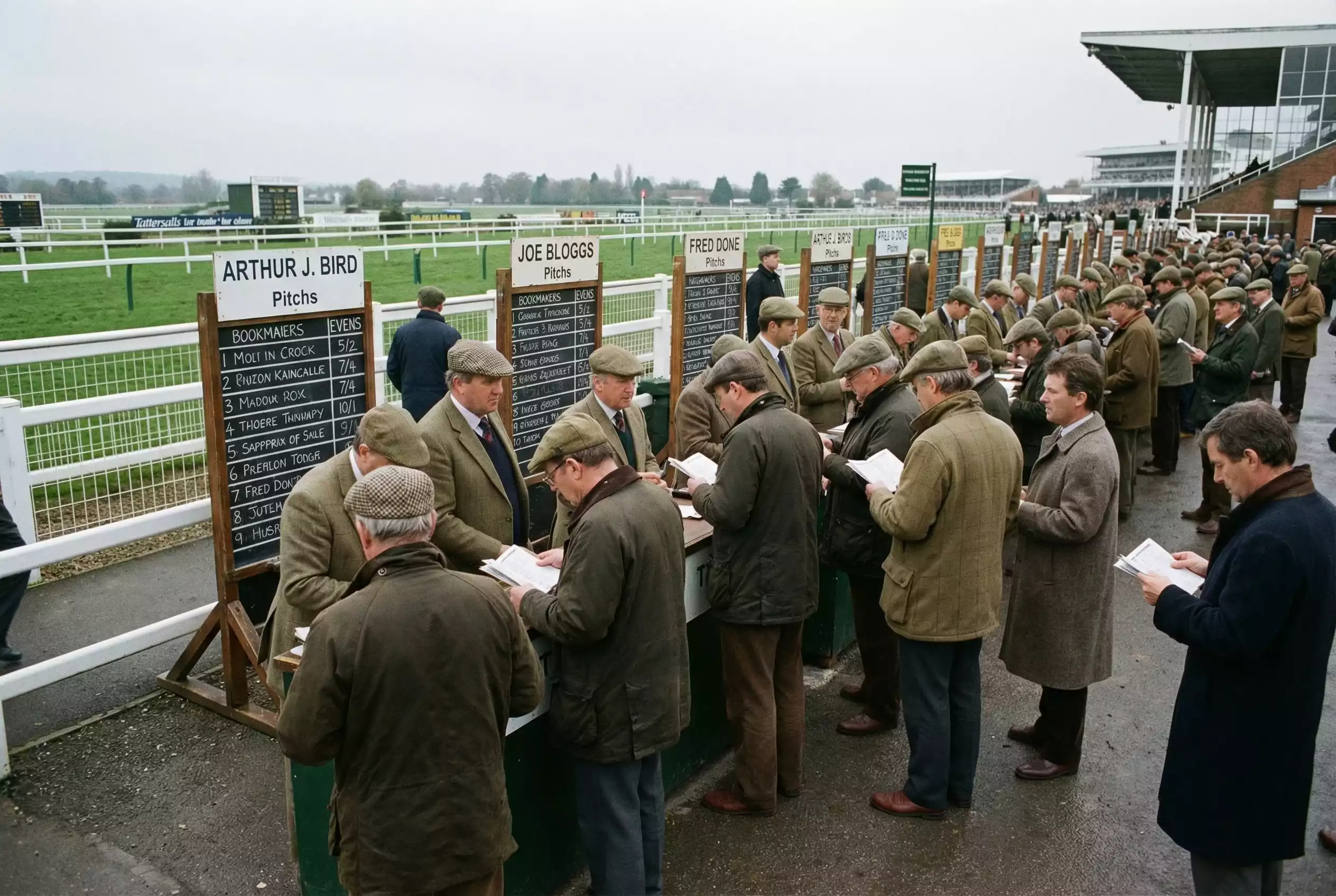
Consider a practical example. You back a horse at 8/1 at 10:00 in the morning. Throughout the day, money comes for the horse, and by race time it is 6/1 favourite. You still get paid at 8/1—your early price. Alternatively, market support for another runner draws money away from your selection, and it drifts to 12/1 by the off. Under BOG, you now get paid at 12/1 despite taking 8/1 earlier. The bookmaker absorbs the risk of price movement; you capture any upside while protecting your downside.
This promotion exists because bookmakers are competing for early-morning turnover. They want punters engaged with cards early, not waiting until five minutes before the race to bet at SP. BOG incentivises early betting by removing the price-risk that would otherwise make punters hesitant to commit early. The cost to bookmakers is manageable—most price movements are modest—while the customer acquisition and retention benefits are significant.
The financial health of UK racing depends substantially on betting activity, and the data from recent years shows interesting dynamics. According to the Horserace Betting Levy Board Annual Report 2023-24, levy income reached £105 million—a record since the 2017 reform. Alan Delmonte, Chief Executive of the HBLB, noted the underlying market shifts: "The year had begun with bookmakers' collective forecasts of Levy yield being lower than the £100m in 2022/23. In the event, there was a continuation of the recent years' trend with turnover falling but being mitigated by an increase in operators' margin and consequential gross profit." Translation: punters are betting less volume, but bookmakers are maintaining yield through better margins. This makes value-hunting—including maximising BOG benefits—more important than ever.
BOG Comparison Table
Not all BOG offers are created equal. Bookmakers vary on when their BOG becomes active, which races qualify, and what exclusions apply. The following comparison covers the major UK bookmakers and their BOG terms as of spring 2026:
| Bookmaker | BOG Activation Time | UK Racing | Irish Racing | Max Payout Limit |
|---|---|---|---|---|
| bet365 | 08:00 UK | Yes | Yes | £500,000 |
| Paddy Power | 09:00 UK | Yes | Yes | £250,000 |
| William Hill | 08:00 UK | Yes | Yes | Account specific |
| Betfair Sportsbook | 10:00 UK | Yes | Yes | £10,000 |
| Sky Bet | 08:00 UK | Yes | Selected | £100,000 |
| Betfred | 08:00 UK | Yes | Yes | £250,000 |
| Coral | 08:00 UK | Yes | Selected | £250,000 |
| Ladbrokes | 08:00 UK | Yes | Selected | £250,000 |
The activation time matters more than many punters realise. An 08:00 activation means bets placed from that time qualify; bets placed at 07:45 might not. For punters betting on the morning's early races or taking ante-post positions that settle on the day, checking the activation window is essential.
BOG Timing
Strategic use of BOG requires understanding when to bet and when to wait. The ideal scenario: take an early price that offers value according to your analysis, then benefit if the market moves against your selection later in the day.
Horses that drift—become longer-priced as race time approaches—are the punter's friends under BOG. Selections that steam—shorten dramatically—are where you capture the full benefit of an early price. Either way, BOG ensures you cannot do worse than the early price you accepted.
The practical workflow: check prices early in the morning after declarations and race cards are finalised. Identify horses where you see value relative to implied probability. Place your bets within the BOG window. Then let the market move as it will—your downside is protected, and any drift converts into bonus profit.
One caveat: BOG does not convert a bad bet into a good one. If you take 5/1 on a horse whose true probability makes it a 3/1 chance, the horse drifting to 7/1 does not suddenly create value. BOG is a tool for capturing extra edge when your original selection was sound; it does not substitute for sound selection.
BOG on Multiple Bets
Multiple bets—accumulators, Lucky 15s, Lucky 31s, and similar structures—represent a grey area for BOG. Policies vary significantly between bookmakers, and the details matter.
Some bookmakers extend BOG to accumulators, meaning each leg of your acca receives BOG treatment independently. Others restrict BOG to singles only. A few offer BOG on multiples up to a certain number of legs (often four or five) before excluding larger accumulators. The maximum payout caps frequently apply with reduced limits for multiples.
For Lucky 15 and Lucky 31 bettors, BOG availability can significantly affect expected value. These bet types already include consolation bonuses for near-misses, and adding BOG across all singles, doubles, and trebles compounds the punter's edge. Before placing multiple bets, check the specific bookmaker's terms—assuming BOG applies universally is a common and costly mistake.
The strategic implication: if BOG on multiples matters to your betting style, filter your bookmaker selection accordingly. A bookmaker offering BOG on accumulators may warrant business even if their base odds are marginally less competitive on certain races.
Finding the Best Odds
The systematic search for best odds separates profitable punters from recreational ones. Accepting the first price you see at your default bookmaker is convenient. It is also expensive. Price differences between bookmakers on the same horse frequently exceed 10%, and over a year of betting, those accumulated differences dwarf any welcome bonus or promotional offer.

The UK betting market has undergone structural changes that make odds comparison more important than ever. The decline in overall betting turnover documented earlier has coincided with bookmakers protecting their margins. Operators facing declining volume have responded not by cutting prices to attract business, but by settling for smaller market share at better margins. The days when betting shops competed fiercely on price have given way to an era where online platforms sometimes offer "good enough" pricing, knowing many customers will not check elsewhere.
Your defence against margin creep is comparison. Every race, every bet, every time. The tools exist to make this straightforward; the habit is what requires development.
Comparison Tools
Odds comparison sites aggregate prices from major bookmakers and display them side-by-side. Oddschecker is the dominant player in the UK market, with comprehensive coverage of racing and integration of additional features like bet tracking and racing tips. Betbrain offers similar functionality with a slightly different interface. Several bookmaker apps now include comparison features, though naturally weighted toward showing their own prices favourably.
Using comparison tools effectively requires more than glancing at the top row. Consider the following workflow:
- Check prices at least 15-20 minutes before the race, not at the last second when spreads may narrow but liquidity thins.
- Verify that BOG applies at your chosen bookmaker for that race—comparison sites show prices but not always promotional eligibility.
- Look at the second and third best prices, not just the top line. If your preferred bookmaker is within one tick of the best price and offers superior BOG terms, the marginal loss may be worth accepting.
- Note which bookmakers consistently offer value on specific race types. Some are aggressive on handicaps; others price conditions races more keenly.
Mobile apps from comparison sites make price-checking quick even when betting on the move. The incremental effort to compare three bookmakers before each bet is minimal; the accumulated benefit over hundreds of bets is substantial.
Value Methodology
Best odds across bookmakers is only half the equation. The more fundamental question is whether those odds represent value—whether the implied probability understates the horse's true chance of winning.
Value betting operates on a simple principle: over time, backing selections where your assessed probability exceeds the implied probability produces profit, regardless of short-term variance. A horse at 4/1 (20% implied probability) that you assess as a 25% chance is a value bet. A horse at 2/1 (33% implied probability) that you assess as a 25% chance is not—even though the shorter price might feel safer.
Developing an independent assessment of probability requires form study: recent performances, class levels, going preferences, jockey-trainer combinations, pace scenarios. The detail of that analysis lies beyond this guide's scope. What matters here is the principle: use your analysis to generate an estimated probability, convert bookmaker prices to implied probability, and bet only where the gap favours you.
Value exists in the gap between your probability assessment and the bookmaker's implied probability. Finding the best price among bookmakers captures marginal value; identifying genuine value through form analysis captures structural edge. Do both.
One practical note: tracking your bets against closing prices—the final SP before the race—provides a check on your skill. If your selections consistently close shorter than the price you took, your assessment method is adding value. If prices consistently drift after you bet, something in your analysis may need adjustment. This feedback loop separates punters who improve from those who repeat the same mistakes.
Each-Way Betting Fundamentals
Each-way betting is two bets combined: one on your selection to win, one on it to place. The total stake doubles—a £10 each-way bet costs £20. If the horse wins, both bets pay out. If it places but does not win, you collect on the place portion at a fraction of the win odds, losing your win stake. If it fails to place, you lose everything.
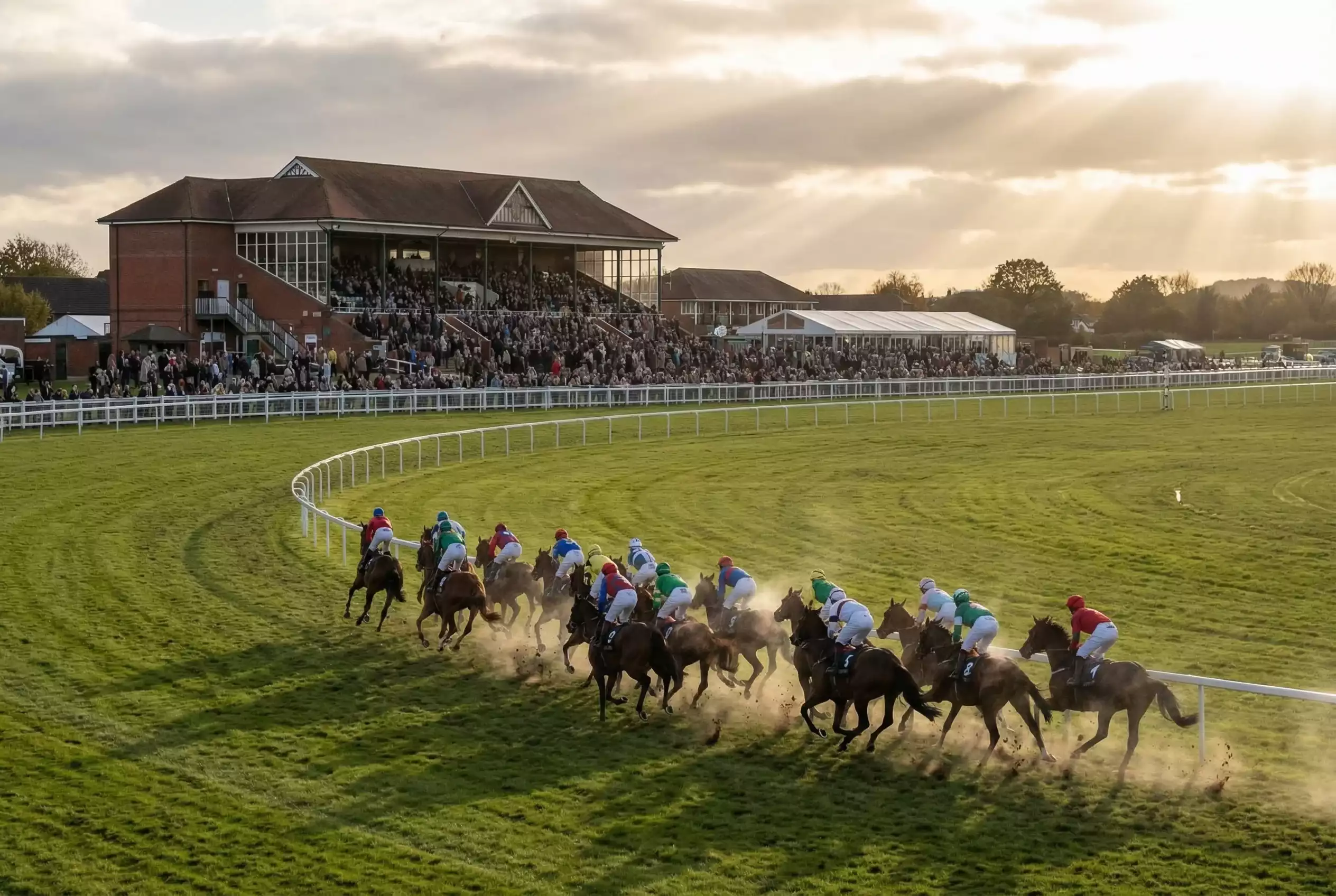
The format has deep roots in British racing culture, particularly for larger field races where backing outsiders to win outright carries punishing strike rates. Each-way betting offers a middle path: participate in the upside of a longshot winner while collecting something back if the horse finishes close behind.
Understanding when each-way betting offers mathematical edge—and when it simply adds cost—is essential for any serious racing punter. The calculations are straightforward once you grasp the mechanics.
Place Terms
Place terms determine how many positions pay out and at what fraction of the win odds. These terms vary by field size and race type:
| Field Size | Places Paid | Place Fraction |
|---|---|---|
| 2-4 runners | Win only (no EW) | N/A |
| 5-7 runners | 1st, 2nd | 1/4 odds |
| 8-11 runners | 1st, 2nd, 3rd | 1/5 odds |
| 12-15 runners | 1st, 2nd, 3rd | 1/4 odds |
| 16+ runners (handicaps) | 1st, 2nd, 3rd, 4th | 1/4 odds |
These are standard industry terms, but bookmakers frequently enhance them for major races or as ongoing promotions. Extra place offers—paying four places on a twelve-runner field, for instance—shift the mathematics significantly in favour of each-way betting. Always check the specific terms at your chosen bookmaker before calculating whether each-way represents value.
The place fraction matters enormously. At 1/5 odds, your 10/1 shot returns just 2/1 (plus stake) on the place portion. At 1/4 odds, the same selection returns 5/2 (plus stake) for placing. On a £10 each-way bet, that difference is £5—pure margin handed to you when bookmakers compete on place terms.
When to Bet Each-Way
Each-way betting offers value in specific circumstances. The mathematics favour each-way when:
- Your selection is a genuine outsider (typically 8/1 or longer) with a realistic place chance.
- The field is large enough to trigger favourable place terms—particularly 16+ runner handicaps with four places at 1/4 odds.
- Extra place promotions extend coverage beyond standard terms.
- Your selection has a higher chance of placing than the place odds imply (the "each-way thief" scenario).
Each-way betting destroys value when:
- Backing short-priced horses. At 2/1, the place return is minimal (either 2/5 or 1/2 depending on terms), and you are effectively just adding cost.
- Small fields with weak place terms—a six-runner race paying 1/4 odds on two places rarely offers each-way value.
- Your confidence is strongly weighted toward win-or-bust. If you believe a horse wins or nowhere, the place portion of an each-way bet is dead money.
Each-Way Calculation: 16-Runner Handicap
Horse priced at 14/1. Standard terms: 4 places, 1/4 odds.
£10 each-way stake = £20 total.
If the horse wins: Win pays £140 + £10 stake = £150. Place pays £35 + £10 stake = £45. Total return: £195 from £20 stake.
If the horse places 2nd-4th: Win stake lost (£10). Place pays £35 + £10 stake = £45. Net result: +£25 from £20 stake.
If the horse finishes 5th or worse: Both stakes lost. Net result: -£20.
The value question: does this horse place with sufficient frequency to justify the additional stake? If you assess it as a 30% place chance on an implied place probability of 25% (derived from the each-way odds), the bet offers edge.
Extra places promotions warrant particular attention during major festivals and feature race days. Bookmakers competing for turnover frequently extend four places to five or even six on Cheltenham Festival handicaps, Grand National day, and similar high-profile cards. When standard four-place terms become six-place terms, the mathematics shifts decisively toward each-way punters.
Top UK Bookmakers for Racing
Serious racing punters maintain accounts with multiple bookmakers. The goal is not loyalty—it is access to the best price on any given race. Each major operator brings distinct strengths for racing specialists, from BOG activation times to streaming quality to the depth of their racing-specific features.
What follows is not a ranking but a comparison. The best bookmaker for your purposes depends on your betting patterns, preferred bet types, and which features you value most. Use this as a guide to building a portfolio of accounts that covers the bases.
Bookmaker Comparison
bet365
BOG from 08:00 on UK and Irish racing with industry-leading maximum payouts. Live streaming of most UK racing without requiring a bet. In-play betting available throughout races. Racing-specific features include detailed form guides and early prices on major races. The app interface prioritises racing with dedicated sections for today's cards. Consistently competitive on headline races though not always best price on smaller meetings.
Paddy Power
Strong promotional activity around major festivals. BOG from 09:00 on UK and Irish racing. Live streaming available with active account. Money-back specials frequently offer genuine edge on feature races. The Irish heritage translates to excellent coverage of Irish fixtures and competitive pricing on cross-channel runners. Occasionally restrictions apply to successful accounts.
William Hill
Long-established racing heritage with early BOG activation from 08:00. Radio commentary integration for races. Extra places frequently offered on major handicaps. The mobile app includes decent form data though lacks depth of dedicated form services. High street presence remains extensive for those preferring shop betting alongside online accounts.
Betfair Exchange
Not a traditional bookmaker but essential for any serious punter. Exchange betting allows backing and laying with fellow punters, frequently offering superior value to bookmaker prices—particularly on shorter-priced horses. No BOG but no margins either beyond commission. Learning curve is steeper than conventional bookmakers. Betfair Sportsbook operates alongside for those wanting traditional betting with BOG from 10:00.
Sky Bet
BOG from 08:00 on UK racing, with selected Irish coverage. Strong integration with Sky Sports Racing for viewers of the channel. Feature race specials and price boosts target headline events. The app is quick and well-designed for mobile betting. Pricing can be conservative on less liquid markets.
Coral
Early BOG activation from 08:00. Part of the Entain group alongside Ladbrokes with shared liquidity benefiting pricing stability. In-app features include Coral Connect for linking shop and online activity. Acca insurance and other promotional features apply to racing multiples. Pricing generally competitive without being consistently best.
Building your portfolio: at minimum, maintain active funded accounts with three bookmakers offering different strengths. A typical combination might include one consistently early with BOG (bet365, William Hill), one strong on promotions and feature races (Paddy Power, Coral), and exchange access (Betfair) for laying or finding superior back prices. Add others as specific opportunities arise—bookmakers rotating extra places on different races, or offering enhanced terms on festivals you follow closely.
Major Festival Betting
The British racing calendar builds toward its major festivals, and these events concentrate the year's best betting opportunities—and its biggest pitfalls. Festival betting differs from everyday race-by-race punting: ante-post markets open months in advance, competitive fields intensify value hunting, and bookmaker promotions reach their peak. Understanding the specific dynamics of each major meeting is essential for capturing available edge.
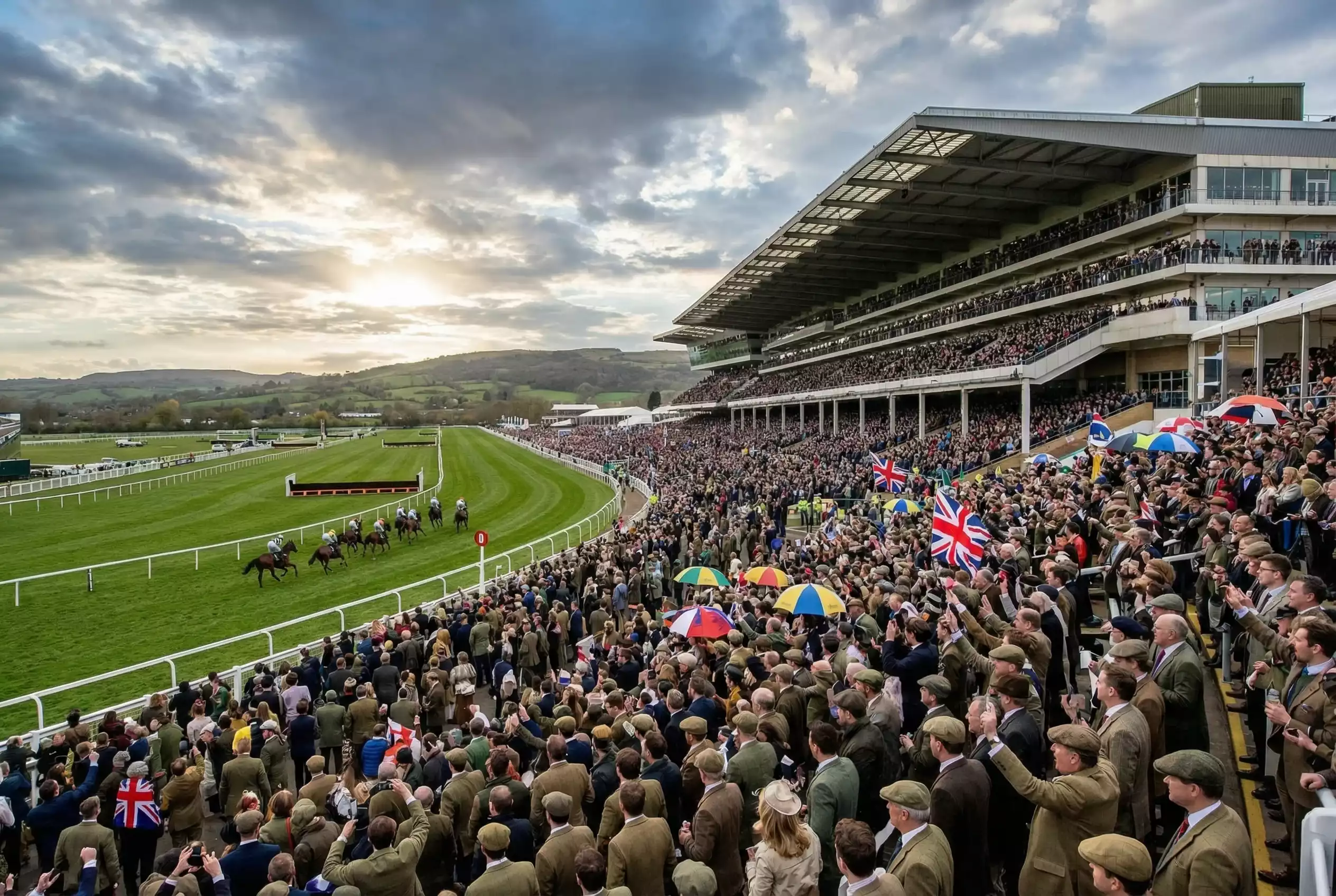
The raw numbers underscore the scale. The 2025 attendance figures noted earlier—over five million racegoers for the first time since 2019—reflect concentrated interest around the flagship meetings that draw casual and serious punters alike. The betting liquidity follows the crowds, with turnover at major festivals dwarfing everyday racing.
Cheltenham Festival
Cheltenham in March represents the pinnacle of National Hunt racing, with 28 races across four days attracting the strongest fields of the jumps season. The ante-post markets open immediately after the previous year's Festival concludes, and prices fluctuate dramatically as the season's form emerges.
For odds hunters, Cheltenham offers particular opportunities. The depth of competition—often 20+ runners in handicaps—pushes bookmakers to price generously across the field rather than concentrate liability on obvious favourites. BOG captures significant value when last-minute market shifts occur. Extra places promotions extend to five or six places on Festival handicaps at most major bookmakers.
The challenge is selectivity. Twenty-eight races over four days tempts overtrading. Disciplined punters identify specific targets where their form analysis offers genuine edge, rather than chasing action across every race. The best opportunities often lie in the handicaps where market uncertainty persists until close to race time.
Grand National
The Grand National at Aintree in April is Britain's most wagered-upon horse race, drawing casual punters who bet once a year alongside regulars. The unique challenge—40 runners over four miles and 30 fences—creates a race where the form book tells only part of the story.
Each-way betting dominates National strategy. Standard four-place terms apply for the main race, with bookmakers typically offering enhanced terms of five, six, or even seven places through promotions. Given the race's unpredictability, backing outsiders each-way at double-figure prices remains the most common approach.
Ante-post markets for the National generate substantial activity from February onwards, with Non-Runner No Bet increasingly offered as standard by major bookmakers. The market moves significantly in the final days as the handicap weights are published and declarations narrow the field. Late-entering horses or those with improving form often represent value against prices set weeks earlier.
Royal Ascot
Royal Ascot in June marks the Flat racing calendar's premier meeting, with Group 1 races across five days attracting the best middle-distance and sprinting talent from Britain, Ireland, and internationally. The betting dynamics differ from National Hunt festivals: fields are smaller, form is more reliable, and professional stables dominate.
Odds comparison pays particular dividends at Ascot, where competitive markets generate meaningful price disparities across bookmakers. The international dimension adds complexity—trainers from France, Australia, Japan, and the Americas occasionally target Ascot prizes, and UK-focused punters may underestimate their chances. Irish raiders historically outperform market expectations.
BOG value emerges when horses attract late support and steam into shorter prices, while your early-morning selection drifts in consequence. The opposite scenario—backing a drifter who fails—burns stake money just as easily. Royal Ascot rewards homework and discipline, not pattern betting on trainer-jockey combinations or course form alone.
Frequently Asked Questions
What is Best Odds Guaranteed and why does it matter for racing bets?
Best Odds Guaranteed is a promotion where bookmakers pay you at the higher of two prices: the odds you took when placing your bet, or the Starting Price if it drifts higher by race time. If you back a horse at 6/1 in the morning and it starts at 9/1, you get paid at 9/1. If it shortens to 4/1, you still receive your original 6/1. This matters because it removes downside risk from early betting while preserving upside. Essentially, BOG is free insurance that lets you lock in value early without penalty if the market moves against your selection. UK and Irish racing bookmakers offer BOG as standard on most races; it is not common in other jurisdictions. Any serious UK racing punter should treat BOG availability as non-negotiable when choosing where to bet.
How do I find the best horse racing odds before a race?
Finding the best horse racing odds requires comparison across multiple bookmakers before placing each bet. Odds comparison sites like Oddschecker display prices from major UK bookmakers side-by-side, allowing quick identification of the best available price. The practical workflow: check prices 15-20 minutes before the race, verify BOG applies at your chosen bookmaker, and consider whether a marginally worse price at a bookmaker with superior BOG terms represents better overall value. Maintain funded accounts with at least three bookmakers to ensure flexibility. Price differences of 10% or more between bookmakers on the same horse are common, and capturing these differences consistently produces significant long-term value. The habit of comparison—rather than defaulting to one bookmaker—is the single most accessible edge available to recreational punters.
What is each-way betting and when is it profitable?
Each-way betting combines two separate bets: one on your horse to win, one on it to place. The total stake doubles—a £10 each-way bet costs £20. If the horse wins, both bets pay out. If it places without winning, you collect place returns at a fraction of the win odds while losing your win stake. Each-way betting becomes profitable in specific scenarios: backing genuine outsiders at 8/1 or longer with realistic place chances; in large field handicaps with 16+ runners paying four places; when extra place promotions extend standard terms; and when your selection has a higher place probability than the implied odds suggest. Each-way is unprofitable on short-priced horses where place returns are minimal, in small fields with weak terms, and when your assessment favours win-or-nothing outcomes. The key is treating each-way as a strategic tool with calculable edge, not a default option for uncertain bets.
Betting Responsibly
Horse racing betting should remain entertainment, not financial distress. The tools and strategies in this guide assume betting within affordable limits—stake money you can lose without consequence to your essential finances or wellbeing. When betting becomes a compulsion rather than a choice, the mathematics of value and odds comparison become irrelevant.
The scale of gambling-related harm in Britain is substantial. According to the Government's Gambling White Paper, approximately 300,000 people in Great Britain meet clinical criteria for problem gambling, with an additional 1.8 million at elevated risk. These figures encompass all gambling, not racing alone, but the accessibility of online betting—available 24 hours a day on mobile devices—has changed the risk landscape significantly.
Julie Harrington, Chief Executive of the British Horseracing Authority, acknowledged the dual realities: "While we support the need to protect individuals from the risk of gambling-related harm, it remains the case that millions of people enjoy betting on horseracing without suffering any ill effects." The industry's future depends on maintaining that balance—protecting vulnerable individuals while preserving the entertainment value for responsible punters.
Practical tools for responsible betting include deposit limits (available at all UK-licensed bookmakers), time-out periods ranging from 24 hours to several weeks, and self-exclusion through GAMSTOP for those requiring a complete break. Setting a betting bankroll—a defined sum separate from everyday finances—and staking consistently relative to that bankroll prevents the escalation that accompanies chasing losses.
Warning signs worth recognising: betting more than you can afford; borrowing money to bet; feeling compelled to recoup losses immediately; betting affecting work, relationships, or mental health; and hiding the extent of your betting from others. If these patterns emerge, support is available through GambleAware (free helpline and live chat), GamCare (counselling services), and the National Gambling Treatment Service.
Conclusion
Finding value in UK racing is not about discovering secret winners—it is about systematic price-hunting, understanding promotional mechanics, and making mathematically sound decisions across hundreds of bets. The marginal gains compound. A 5% improvement in average odds captured, sustained over a year of betting, transforms losing records into profitable ones.
The essentials bear repeating. Best Odds Guaranteed should be standard for every qualifying bet; accepting a price without BOG protection is leaving value on the table. Comparing prices across at least three bookmakers before each bet captures price disparities that individual bookmakers hope you will not notice. Each-way betting works in specific circumstances—large fields, genuine outsiders, enhanced terms—and destroys value elsewhere. Festival betting offers concentrated opportunities where liquidity and promotional competition peak.
The tools exist. Odds comparison is a few taps away on any smartphone. BOG terms are published and verifiable. Place terms and extra places offers are announced in advance. The only requirement is the discipline to use them consistently, rather than defaulting to convenience.
Start with a comparison tool. Before your next racing bet, check three bookmakers for the price. Note the BOG activation times and terms. Calculate whether each-way offers value given the field size and place odds. Make a conscious decision rather than an automatic one. That habit—questioning, comparing, calculating—is the foundation of profitable betting.
The UK racing market offers genuine opportunities for punters who approach it seriously. Those who bet casually subsidise the returns of those who bet carefully. Decide which group you want to belong to.